
5 Easy Homeschool Phonics Games
The sound of children laughing is like music to this mommas ears, especially if they are learning something while they giggle.
For many families, the best homeschool phonics activities are the ones that are simple, playful, and easy to repeat. When young children enjoy the learning process, they are often more willing to practice the letter sounds and early reading skills they need. That’s when long lasting learning takes place!
Let’s be real. If you simply drill a phonics chart with your children, this is a recipe for boredom and burnout for all involved.
These easy homeschool phonics games are designed for moms teaching beginning readers at home. They use simple materials, fit naturally into your homeschool routine, and help build confidence one small step at a time. Games are a great way to review and practice phonics skills and do some family bonding as well.
Homeschool Phonics Games Help Beginning Readers Learn Through Play
Phonics games are a gentle way to make early reading practice feel more natural. Instead of relying only on worksheets, homeschool phonics games invite children to move, listen, touch, sort, build, and repeat important skills in a fun way. All of that movement is an integral part of the learning process as well as physical development as well.
What a great way to give time and attention to the whole child. You are also building great memories!
When you use phonics games in your homeschool, your child can practice:
- letter recognition
- beginning sounds
- blending sounds
- vowell sounds
- word building
- reading confidence
Simple games often work best because they keep the focus on the skill without making the lesson feel heavy.
Easy Homeschool Phonics Games Can Make Reading Practice More Engaging
Children learn through repitition. Even those children that seem to pick up concepts quickly, repitition Many beginning readers need repeated exposure to the same sounds and words. Homeschool phonics games make that repetition feel fresh. Simple phonics games can turn boring practice into something enjoyable.
That is why easy phonics games are so helpful in a homeschool setting. They give parents practical ways to teach reading at home without needing a lot of preparation or expensive materials.
Homeschool Phonics Game 1: Sound Hop
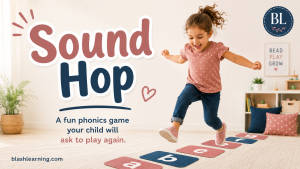
Sound Hop is one of the easiest homeschool phonics games for active children.
How to Play This Homeschool Phonics Game
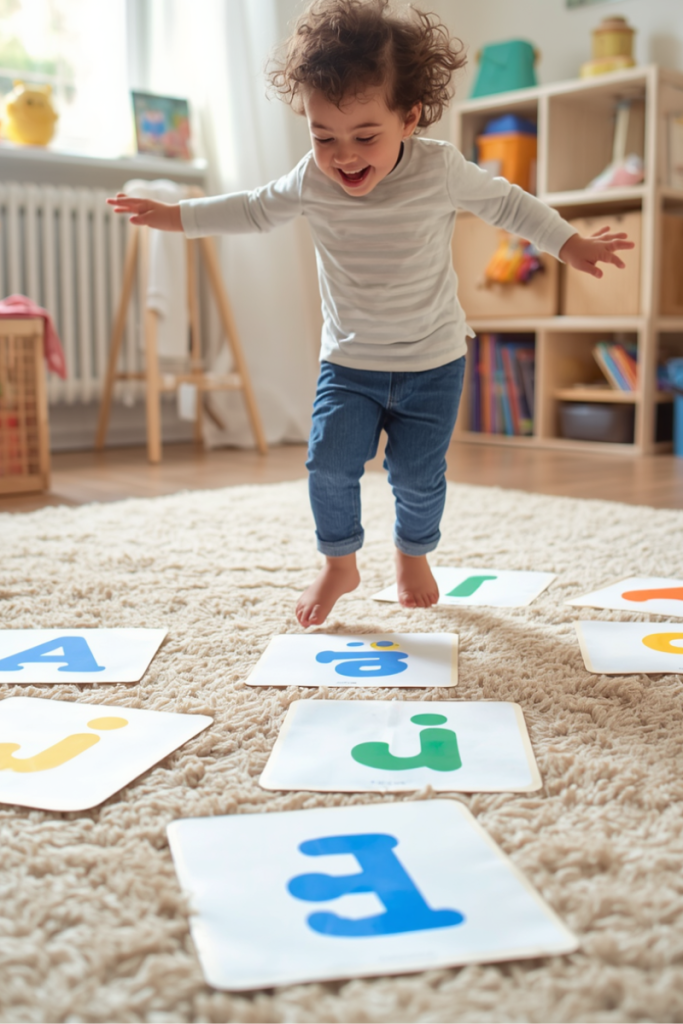
Write individual letters on paper or sticky notes and place them on the floor. Call out a letter sound and ask your child to hop to the correct letter. You can also point to a letter and have your child say the sound before hopping.
For a little more challenge, say a simple word like sun and ask your child to hop to the beginning sound.
Why This Phonics Game Works in Homeschool
This homeschool phonics game combines movement with sound recognition. That makes it especially helpful for young children who learn better when they are physically involved in the lesson.
Homeschool Phonics Variation for Sound Hop
Use only three to five letters at a time so your child can focus without feeling overwhelmed.
Homeschool Phonics Game 2: Mystery Sound Box
Mystery Sound Box is a simple homeschool phonics activity that helps children hear beginning sounds in words.
How to Play This Homeschool Phonics Game
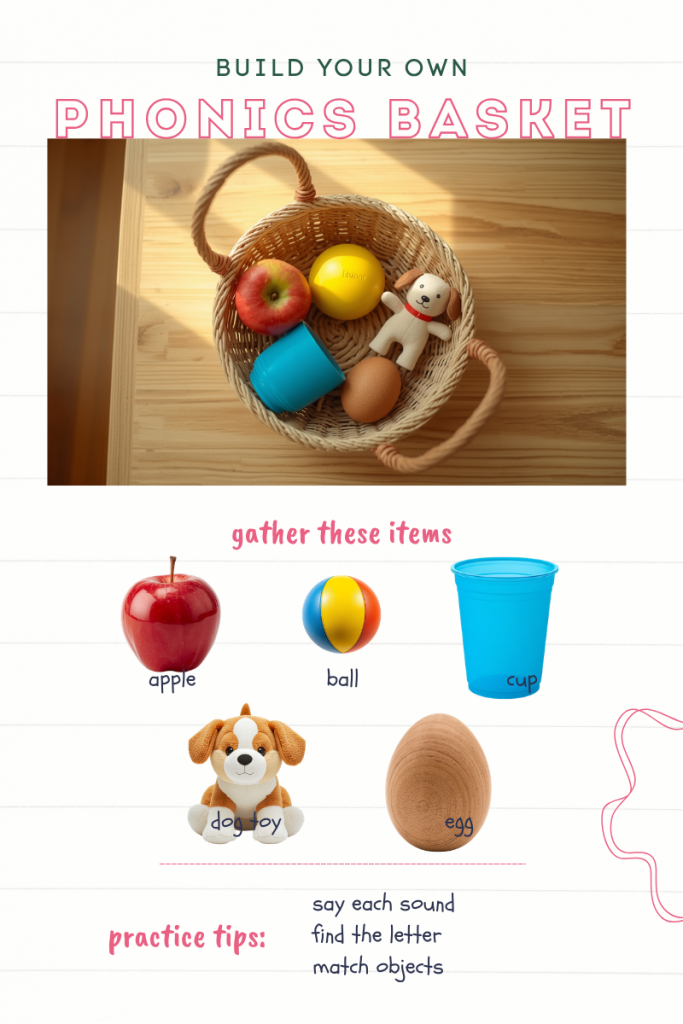
Place small household objects in a box or basket. Use items with clear beginning sounds such as ball, sock, pen, toy car, spoon, or cup. Ask your child to pull out one object, say its name, and identify the beginning sound.
You can also sort the objects by sound.
This Phonics Game Helps Beginning Readers in Homeschool
Before children can read words well, they need practice hearing sounds in spoken language. This homeschool phonics game builds phonemic awareness in a hands-on way.
Homeschool Phonics Variation for Mystery Sound Box
Choose two or three target sounds, such as b, m, and s, and have your child sort each item into the correct sound group.
Homeschool Phonics Game 3: Build-a-Word with Letter Tiles
Build-a-Word is one of the most effective homeschool phonics games for teaching sound blending.
How to Play This Homeschool Phonics Game
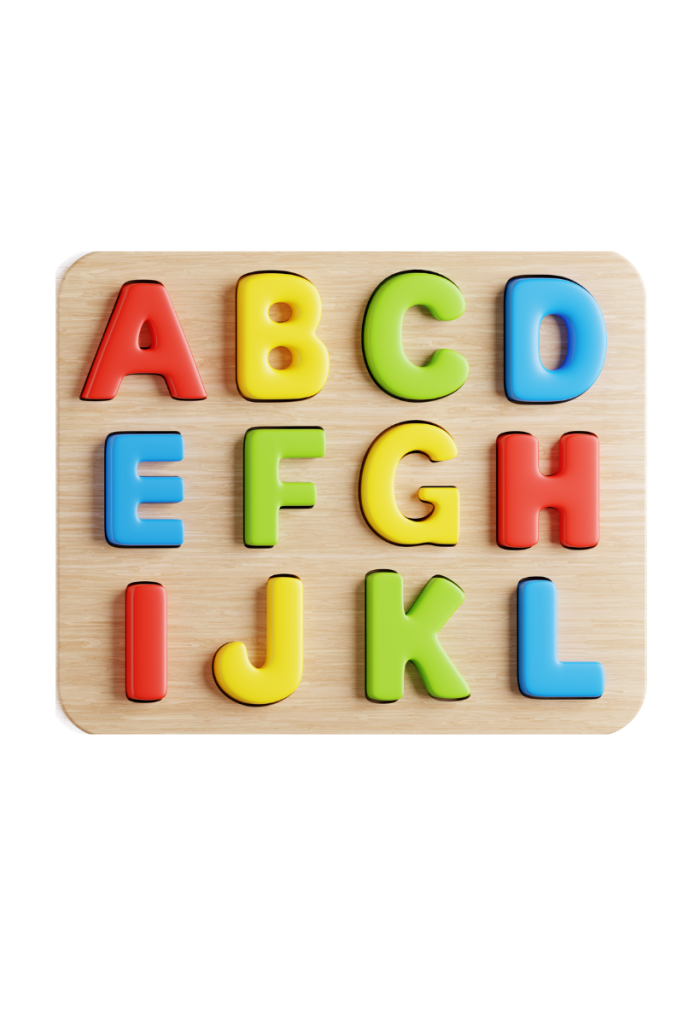
Use magnetic letters, letter tiles, or paper letter cards. Say a simple CVC (Consonant Vowel Consonant) word such as cat, sit, map, or dog. Help your child build the word one sound at a time.
After building the word, have your child slide a finger under the letters and blend the sounds together to read the whole word.
This Phonics Game Works for Homeschool Reading Lessons
This homeschool phonics game helps children connect sounds to letters and see how those sounds come together to form words. It also supports early spelling, which strengthens reading development.
Homeschool Phonics Variation for Build-a-Word
Create a simple word chain by changing one letter at a time:
- cat
- bat
- bag
- rag
This helps your child notice how changing one sound changes the word.
Homeschool Phonics Game 4: Phonics Hide-and-Seek
Homeschool Phonics Game 4: Phonics Hide-and-Seek
How to Play This Homeschool Phonics Game
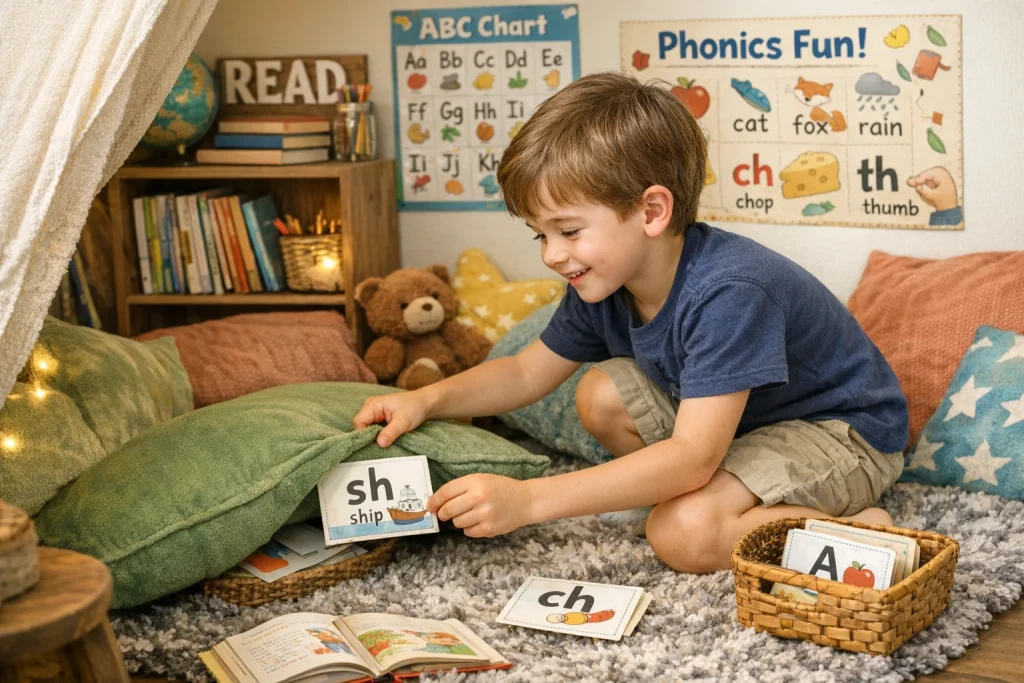
Hide letter cards or word cards around the room. Ask your child to find a card and say the sound or read the word. You can also give clues such as, “Find the letter that says /m/.”
If your child is ready, use simple word family cards like -at, -in, or -op.
Why This Phonics Game Works Well in Homeschool
This homeschool phonics game adds movement and excitement to phonics review. It works especially well for young learners who need lessons to feel short and engaging
Homeschool Phonics Variation for Hide-and-Seek
Hide picture cards and ask your child to match each picture to the correct beginning sound card.
Homeschool Phonics Game 5: Roll and Read
Roll and Read is an easy homeschool phonics game that can be used again and again.
How to Play This Homeschool Phonics Game
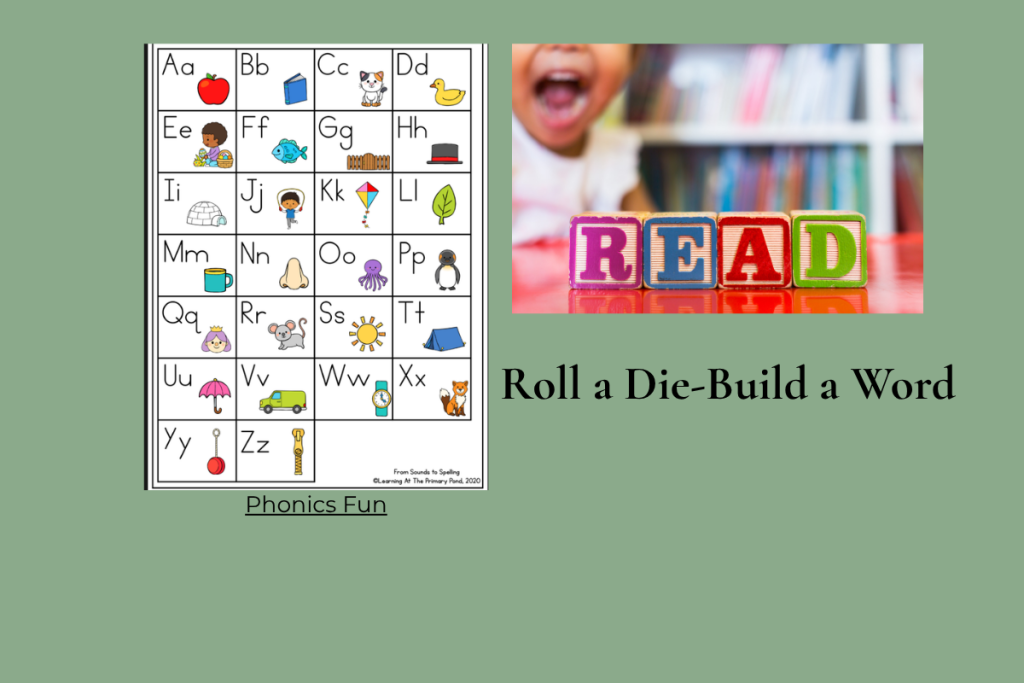
Create a simple chart with letters, word families, or beginner words. Have your child roll a die and read the sound, pattern, or word in the matching row or column.
You might include:
- single consonant sounds
- short vowels
- CVC words
- word family pattern
This Phonics Game Supports Homeschool Reading Practice
This homeschool phonics game gives children repeated practice in a low-pressure format. The die adds a fun element that keeps review from feeling boring
Homeschool Phonics Variation for Roll and Read
Make seasonal or themed versions for fall, winter, spring, or holidays to keep your homeschool phonics practice fresh.
Homeschool Phonics Tips for Teaching Beginning Readers at Home
Using homeschool phonics games does not have to take a lot of time. A few minutes each day can be enough to build steady progress. It is the consitency that is going to make the difference. You will notice that one child might need more practice than another and that’s ok. Each child is differenta and that’s what makes our children so special.
Read about more activities you can do at home to help build reading skills
Keep Homeschool Phonics Practice Short and Simple
Short lessons often work better than long lessons for beginning readers. Aim for focused, playful practice that leaves your child feeling successful. This is one of the keys that Charlotte Mason emphasized. The short lessons keeps the mind from getting overly fatigued. This keeps children wanting more and ready for the next lesson.
Repeat Homeschool Phonics Games Often
Children benefit from repetition. Using the same homeschool phonics games multiple times can strengthen learning and build confidence.
Choose Homeschool Phonics Activities That Match Your Child
Some children love movement. Others prefer quiet table work. Choosing homeschool phonics games that fit your child’s learning style can make reading lessons go more smoothly.
Homeschool Phonics Can Feel Gentle and Doable
It is easy to wonder if you are doing enough when you are teaching reading at home. The good news is that homeschool phonics does not have to be elaborate to be effective. Consistent, gentle practice can make a real difference.
These easy homeschool phonics games help beginning readers practice important early literacy skills while keeping lessons simple and encouraging. Start with one or two games that fit naturally into your homeschool day, and build from there. Don’t forget to have fun with your kids. Let the laughter roll as you practice with your child or children.
Homeschool Phonics Games Can Build Reading Confidence One Step at a Time
The early stages of reading are full of small steps. Each sound your child learns and each word your child reads matters. Homeschool phonics games can help make that journey feel positive for both you and your child.
When phonics practice feels manageable, children are more likely to stay engaged. And when homeschool parents have simple tools that work, teaching reading at home can feel much more peaceful.
Keep in mind that you are your child’s most important influence. Be assured that you are building something wonderful and long lasting. Enjoy your time playing games.