“What Do I Do When My Child Hates Reading?”
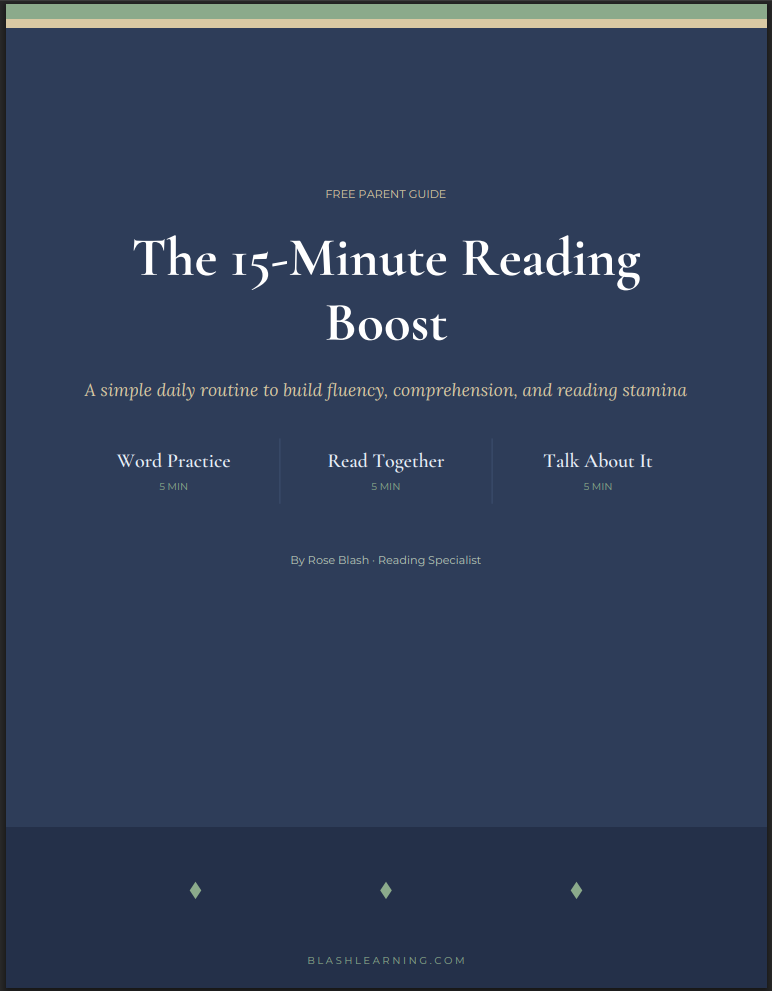
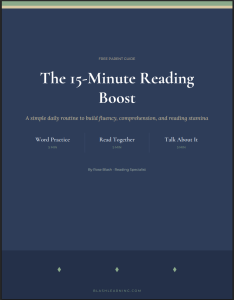
Take the first step in making your reading journey more pleasant. Get the free download: The 15-Minute Reading Boost.
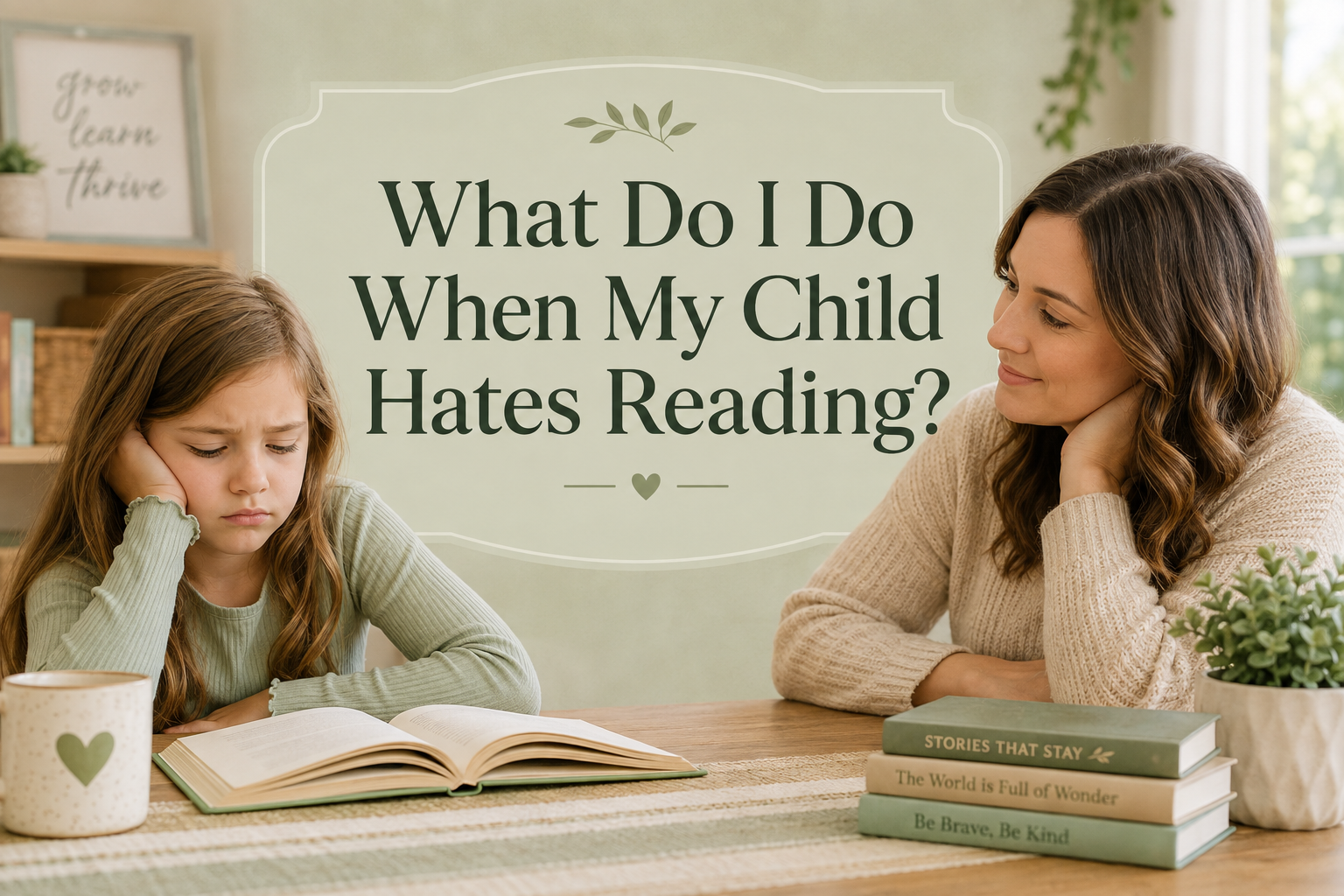
Few moments test a homeschool mom’s perception of her teaching ability like her child crying when it’s time for the daily reading lesson. What do I do when my child hates reading is a question that plagues many parents.
Let me reassure you that you’re not the problem, and your child is not broken.
My Child Hates Reading Instruction
If reading lessons have turned into tears, refusal, or dread before you even sit down, you are not alone, and you have not failed your child.
Your child may appear to hate reading because he or she is struggling. They don’t feel successful, and they are trying to avoid the pain of the struggle.
Some struggle can be productive. If the struggle results in an accomplishment, then there is the reward. If the struggle leads only to continual failure, we all want to avoid it.
As an educator with 25 years in the classroom, I watched this exact scene play out again and again, in traditional schools and homeschool settings alike. A child shuts down, a parent panics, and almost always, the real problem is not the child’s ability. It is the approach.
What It Looks Like When My Child Hates Reading
A child who hates reading time is not usually a child who hates books. That child who has come to associate reading with pressure, repetition, or failure. You might recognize a few of these:
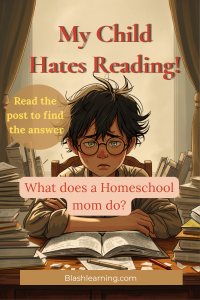
- Crying or stalling before lessons even begin
- Refusing to sound out words he could read yesterday
- Losing focus within a few minutes
- Saying “I’m bad at this” or “I can’t do it”
These are not signs of a learning disorder in most cases. They are signs of a child exhausted by a method never built with him in mind.
A Charlotte Mason Perspective: When a Child Hates Reading
Charlotte Mason understood something modern phonics programs often miss. Children are not machines meant to be drilled. They are persons, with minds that need to be fed, not forced. The child’s mind needs to be engaged.
Many of the most popular reading programs rely on long lessons, repetitive drilling, and worksheets disconnected from real language. For some children, this works well enough. For others, especially sensitive or easily discouraged children, it backfires.
The lesson becomes longer than the child’s attention can bear, and frustration sets in before any real learning happens. More is not necessarily better.
Charlotte Mason’s method offers a different path. Short lessons that do not tire the brain out. Living language instead of dry, repetitive text. Narration instead of worksheets. Helping children attend to detail. The goal is not to push a child through material as fast as possible. After all, what is the rush?
The goal is to meet the child where he is and build genuine understanding, a little at a time.
Interestingly, this adjusted pace is often what allows a struggling reader to relax enough to finally learn.
Fear is the foundation of hating reading
If you are reading this because your own child is the one crying at the table, I want to speak to the fear underneath it. You are afraid you are doing this wrong. You are afraid you are not qualified. You are afraid you will set your child back in a way that cannot be undone.
I understand that fear because I have lived it. My own son struggled with reading, and I felt every bit of that same panic, even with decades of classroom experience behind me. Credentials do not remove the worry of watching your own child struggle.
But they did teach me something important: the problem is rarely the child. Having said that, parents need to respect each child’s timing. Each child learns at a different pace, and progress may look different from child to child. The problem is most often the method.
You do not need a teaching degree to help your child learn to read well. You need a method built around how children learn: short, focused, encouraging, and rooted in real language rather than drills.
A Small First Step You Can Take Today
If lesson time has become a battle, the first step is not a new curriculum or a complete overhaul. It is shrinking the lesson down to something your child can actually succeed at.
This is exactly why I created The 15-Minute Reading Boost, a free guide built on Charlotte Mason principles. It gives you specific, short lessons along with simple guidance on prompting your child to narrate, so reading time becomes a connection rather than a conflict. No hours of lesson planning. No guessing what to say when your child stumbles. Just clear, doable steps you can start using today.
Even fifteen minutes, approached the right way, can begin to shift how your child feels about reading.
Changes Will You See When Your Child Stops Hating Reading
Once lessons become short and the pressure lifts, something predictable happens. Children stop bracing for failure. They start engaging again, even in small ways.
The beauty of the short lesson is that children leave the session wanting more. The next session is set up for success because the child is excited to learn more.
I still remember my first day of kindergarten; I can see the list of words we were going to learn the next day. I could not wait! It is a simple but powerful truth. You want to leave them wanting more.
Living books replace dry, repetitive text, giving your child something worth paying attention to. Narration, simply asking your child to tell back what he heard or read, becomes a gentle way to check understanding without quizzes or worksheets. Short lessons preserve his attention span rather than exhausting it.
Narration lays the groundwork for better attention. They know they will need to share what happened, so they learn to pay attention as they read or are read to. This is a key foundational principle of Charlotte Mason.
Furthermore, this approach gives you something concrete to look for instead of vague reassurance. You begin to see real progress: a child who narrates a little more clearly, sits a little longer, stumbles less, and relaxes more.
Perhaps most importantly, the tears begin to fade. Not because the child suddenly becomes a strong reader overnight, but because reading time no longer feels like a fight he is destined to lose.
You Are the Right Person for This
Parents, stay connected with your children, especially in the middle of a struggle like this one. Your presence and patience matter more than any program. Reading struggles can feel isolating, but they are common and workable with the right approach.
Hopefully, this gives you a clearer picture of why your child may be struggling and a gentle place to start today. You do not need to have it all figured out. You only need a method built for how children actually learn, and a willingness to take it fifteen minutes at a time.
If you are ready for those first steps, the 15-Minute Reading Boost is free and built exactly for this moment.
Is your child struggling with reading right now? What does lesson time look like in your home?
Frequently Asked Questions About Children Who Hate Reading
Why does my child hate reading lessons?
A child who resists reading lessons does not necessarily hate books or stories. Reading may have become associated with pressure, frustration, long lessons, repetitive practice, or the fear of making mistakes. Shortening the lesson and helping your child experience small successes can begin to rebuild confidence.
What should I do when my child cries during reading lessons?
Pause the lesson before frustration becomes overwhelming. Reassure your child that struggling does not mean he is bad at reading. Return later with a shorter, simpler activity that allows him to succeed. A calm five- or ten-minute lesson is often more productive than pushing through a longer lesson filled with tears.
Should I make my child continue reading when he refuses?
Forcing a discouraged child to continue may strengthen the connection between reading and failure. Instead, calmly end the lesson, consider what caused the frustration, and adjust the next lesson. You may need to shorten the reading passage, provide more support, choose easier material, or read part of the selection aloud.
How can the Charlotte Mason approach help a struggling reader?
A Charlotte Mason approach emphasizes short lessons, focused attention, meaningful language, living books, and narration. Instead of relying only on repetitive drills and worksheets, the child interacts with language that is interesting and worth understanding. This can help reading feel more purposeful and less exhausting.
Are short reading lessons really effective?
Yes. Short, focused lessons allow a child to practice without reaching the point of mental exhaustion. A fifteen-minute lesson can include a brief warm-up, reading practice, a simple narration prompt, and encouragement. Consistent short lessons are often more effective than occasional long lessons that end in frustration.
What is narration, and how does it support reading comprehension?
Narration means asking your child to tell back what he has read or heard in his own words. You might ask, “What was this mostly about?” or “What was the most important part?” Narration helps you see what your child understood without relying on a worksheet or a long list of comprehension questions.
What kind of books should I use with a reluctant reader?
Choose books and passages with meaningful language, interesting characters, and engaging ideas. The reading level should be manageable enough that your child can experience success. You can also read richer books aloud so your child continues enjoying good stories while developing independent reading skills.
How can I encourage my child without adding more pressure?
Give specific praise that focuses on effort, attention, or progress. You might say, “You kept trying when that word was difficult,” or “You remembered an important detail.” Specific encouragement helps your child recognize what he is doing well without feeling that he must read perfectly.
Does reading resistance mean my child has a learning disorder?
Not necessarily. Reading resistance can result from frustration, lessons that are too long, material that is too difficult, or a method that does not fit the child. However, if your child continues to struggle with recognizing sounds, blending words, remembering previously learned skills, or making progress despite consistent support, consider speaking with a qualified reading specialist or educational professional.
How long will it take for my child to stop hating reading?
There is no single timeline because every child is different. Some children begin relaxing as soon as the pressure decreases, while others need more time to rebuild confidence. Look for small signs of progress, such as fewer tears, greater willingness to begin, improved attention, or more confident narration.
What is one change I can make today?
Shorten the next reading lesson and choose one achievable goal. Read a brief passage together, ask your child to tell you what it was mostly about, offer specific encouragement, and stop while the experience is still positive. A successful short lesson can become the first step toward changing how your child feels about reading.
Take one step at a time and be encouraged.