
12 Ways to Build Reading Comprehension Through the Developmental Stages
Start your journey with guided support with FREE guidance with The 15 Minute Reading Boost.
Reading comprehension through the developmental stages often begins before a child can read a single book independently.
Children frequently show us that they are getting ready to read through their curiosity and enthusiasm.
They may ask what a sign says, notice the first letter in their name, finish a familiar sentence in a favorite book, pretend to read to a younger sibling, or ask you to read the same story again and again.
These little moments matter.
Rather than waiting until a child is officially “reading” to develop reading skills, we can encourage that natural interest while gently teaching the skills that will help reading become easier.
And as our children grow, the way we support them changes.
A preschooler listening to a picture book needs something different from a seven-year-old sounding out words, and both need something different from a ten-year-old beginning to understand more complex ideas.
That is why it helps to think about reading comprehension through the developmental stages instead of treating reading as one skill children either have or do not have.
The goal is not to rush children through the stages.
The goal is to notice where they are, strengthen what is developing, and help them take the next step with confidence.
Why Reading Comprehension Through the Developmental Stages Begins With Relationship and Routine
We sometimes assume that when a child resists reading, the problem is motivation.
We think that if they simply wanted to read more, everything would fall into place.
But sometimes a child needs something much more practical.
They need a predictable time to read.
They need books that are appropriate for where they are developmentally.
They need encouragement when reading feels difficult.
And they need an adult who is willing to sit beside them and help.
This is one reason I believe short, consistent reading experiences can be so valuable.
Instead of waiting for the perfect time or trying to fit in a long lesson, we can build reading into the ordinary rhythm of our homes.
Tip 1: Give reading a predictable place in your day.
Choose a time that already works naturally for your family.
It might be after breakfast, after lunch, before quiet time, or just before bed.
When reading regularly follows something your child already expects, it becomes easier to maintain.
Tip 2: Make the environment inviting.
You do not need an elaborate homeschool reading room.
A small basket of appealing books, a comfortable chair, or a few favorite titles displayed where children can reach them can make reading easier to begin.
The purpose is not to create a Pinterest-perfect space.
It is simply to make books easy to see, easy to reach, and easy to enjoy.
If reading has become stressful in your home, you may also find 5 Gentle Ways to Transform Reading Time from Struggle to Joy helpful.

Building Reading Comprehension Through the Developmental Stages With Short Daily Practice
Longer is not always better when children are learning to read.
A short period of focused reading that happens consistently can be much easier for both you and your child than an occasional marathon session. The short lessons give the brain an opportunity to work on a particular subject and then move on to something else before fatigue sets in.
Tip 3: Keep reading sessions manageable.
Ten or fifteen focused minutes can accomplish a great deal.
You can listen to your child read, practice a skill that needs strengthening, ask a thoughtful question, and finish before everyone is exhausted.
This also helps protect the relationship.
We want our children to leave reading time believing, “I can do this,” rather than feeling defeated before tomorrow’s lesson has even begun.
Tip 4: Pay attention to what your child is showing you.
Reading development is not simply about moving through a curriculum.
Notice what your child can already do.
Can they hear rhyming words?
Do they recognize letters and sounds?
Can they blend sounds together?
Are they reading words accurately but having trouble telling you what they just read?
Those observations give you valuable information about what to teach next.
Be sure to celebrate those wins and support the areas needing help.
If you are unsure where to begin, my How to Teach Your Child to Read at Home: A Complete Guide walks through the process in more detail.

Reading Comprehension Through the Developmental Stages: Preschool and Reading Readiness
For preschool-aged children, reading is deeply social.
They may not be decoding words independently yet, but they are already developing important comprehension skills.
They are learning that stories have meaning.
They are building vocabulary.
They are beginning to predict what might happen next.
They are learning to listen, remember, and talk about ideas.
Tip 5: Read aloud and talk naturally about the story.

You do not need to turn every book into a lesson.
Pause occasionally to wonder aloud.
“What do you think will happen next?”
“Why do you think she did that?”
“Have you ever seen something like this?”
These simple conversations help your child connect language with meaning.
Tip 6: Follow signs of reading readiness rather than rushing them.
If your child starts asking about letters, words, or sounds, respond to that curiosity.
If they want to “read” a familiar story from memory, let them.
If they recognize a word on a cereal box or street sign, celebrate the connection.
Reading readiness often grows through these ordinary experiences.
You can teach intentionally without turning every moment of enthusiasm into a formal lesson.
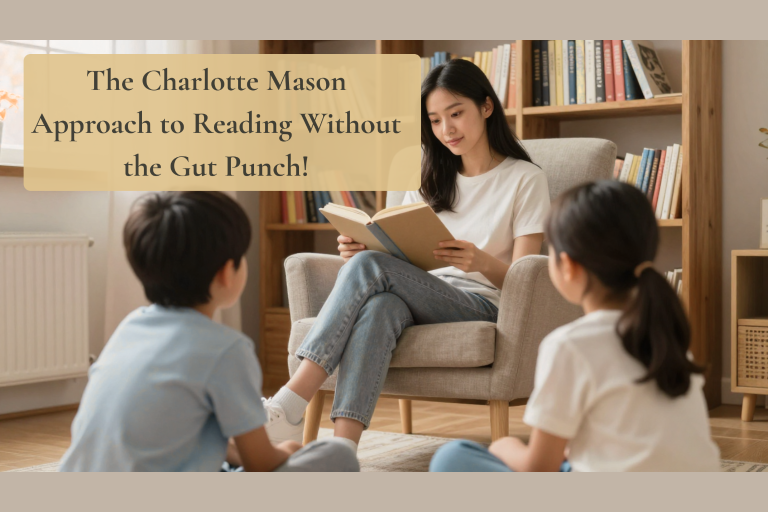
That balance fits beautifully with the Charlotte Mason approach to reading, where meaningful language, good books, and respect for the child all have an important place.
Reading Comprehension Through the Developmental Stages: Early Readers Ages 6–8
As children begin decoding, a great deal of mental energy goes into figuring out the words on the page.
That means a child can sometimes read every word correctly and still have only a fuzzy idea of what the passage meant.
This is an important stage in reading comprehension through the developmental stages.
We are helping children become more automatic with words while still keeping their attention on meaning.
Tip 7: Use familiar reading to build fluency.
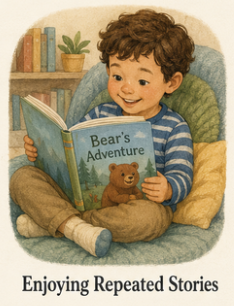
Children do not always need a brand-new passage.
Rereading a favorite poem, short story, or familiar book gives them an opportunity to become smoother and more confident.
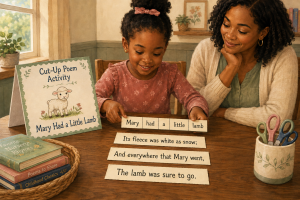
When I was in the classroom, my students enjoyed working with a familiar cut-up poem.
I would write the poem on sentence strips and cut the words into separate sections.
The children could put the words back in the correct order based on their memory of the poem.
Sometimes I also placed a complete copy of the poem on the wall at eye level so they could refer to it as needed.
They were reading, remembering, noticing words, and becoming increasingly familiar with the language without the activity feeling like a test.
Tip 8: Let comprehension remain part of the reading lesson.
After your child reads, ask them to tell you what happened.
Charlotte Mason called this narration.
You do not need a long list of comprehension questions.
A simple “Tell me about what you just read” can show you quite a bit.
You will begin to hear what your child understood, what they remembered, and where something may have been confusing.
Reading Comprehension Through the Developmental Stages: Upper Elementary Readers
By upper elementary, many children can read the words with much greater ease.
Now we can begin giving more attention to richer ideas, unfamiliar vocabulary, different genres, and increasingly complex texts.
Tip 9: Broaden the kinds of books your child encounters.
Include nonfiction, poetry, biographies, historical fiction, nature books, and well-written stories.
Reading comprehension grows when children have background knowledge to connect new ideas to.
This is one of the reasons I value rich books in a homeschool education.
We are not simply teaching children to pronounce words.
We are helping them understand the world those words describe.
Tip 10: Continue giving your child meaningful choices.
Choice becomes increasingly valuable as children grow.
You can still guide the quality and appropriateness of the books you offer while allowing your child to choose between several good options.
That combination gives children both guidance and ownership.
For families following a Charlotte Mason-style education into the later years, resources such as AmblesideOnline can also provide a helpful picture of how increasingly challenging books are introduced over time.
How Book Choice Supports Reading Comprehension Through the Developmental Stages
The right book can make a remarkable difference.
A book that is much too difficult may require so much attention to decoding that very little attention remains for meaning.
On the other hand, a book that captures your child’s interest can invite questions, connections, and conversation.
Tip 11: Separate independent reading from read-aloud reading.
Your child does not have to read every worthwhile book independently.
There is real value in reading books aloud that are beyond your child’s current decoding ability.
This allows your child to encounter richer vocabulary, more complex sentences, and deeper ideas without being limited by what they can currently sound out alone.
At the same time, independent reading material should allow your child to experience success.
If every line requires help, that particular book may be better enjoyed together for now.
Why Shared Reading Matters for Reading Comprehension Through the Developmental Stages
Tip 12: Keep reading aloud even after your child learns to read.
Reading aloud is not only for preschoolers.
Older children still benefit from hearing fluent, expressive reading and discussing interesting ideas with you.
It is also an opportunity for something that can easily get lost when we become focused on skills: connection.
Organizations providing literacy support have also found value in combining foundational reading instruction with a caring, individualized relationship.
You can read more about one example through Children Rising’s Succeeding by Reading program.
When a child knows that the person helping them read is for them, reading practice can feel very different.
A Simple Framework for Reading Comprehension Through the Developmental Stages
One of the questions I hear from parents is not whether reading is important.
They already know that.
The harder question is, “What exactly should I do with my child today?”
When there are phonics skills, fluency, comprehension, narration, vocabulary, and reading stamina to think about, it is easy to become overwhelmed.
That is exactly why I created my free 15 Minute Reading Boost.
I wanted parents to have a simple framework they could actually use instead of another resource that would sit in a download folder.
The 15 Minute Reading Boost gives you a manageable way to work on important reading skills in a short daily block.
When you sign up, you will also receive a short series of practical reading activities you can use with your child.
You do not have to do everything at once.
You simply need to know where your child is today and what small step will help them move forward.
A Gentle Perspective on Reading Comprehension Through the Developmental Stages
Your child’s reading development is not a race.
There will be times when progress seems to happen almost overnight.
There may also be seasons when you wonder whether anything is changing at all.
Both can be normal parts of learning.
Continue reading together.
Notice the small signs of growth.
Pay attention to the places where your child needs more support.
Give them rich books, meaningful conversations, and plenty of opportunities to practice without making reading feel like a constant performance.
You do not need to implement all 12 ideas tomorrow.
Choose two or three that fit the season your family is in and begin there.
As your child’s skills develop, your role will change too.
You will move from helping them notice sounds and words, to listening as they decode, to discussing increasingly rich ideas together.
That gradual growth is what makes reading comprehension through the developmental stages so important to understand.