
How to Help Your Child Improve Reading Comprehension at Home
This is a great tool for helping your child read. Grab the free guide now.
Mama, can I tell you something encouraging? If your child can read every word on the page but struggles to tell you what the story was actually about — that is one of the most common things I hear from homeschooling families. And the fact that you are noticing it and looking for answers? That already puts you miles ahead.
You are not failing. Your child is not behind forever. What you are seeing is called a reading comprehension gap — and with a little consistency and the right approach, it is absolutely something you can work on together, right at your kitchen table.
If you’re new to the Charlotte Mason approach, you might love this post first. What is Narration in Homeschool?
What is Reading Comprehension and why does it matter so much
Reading comprehension is not just about recognizing words on a page — it is the ability to truly understand what those words mean together. It is the difference between a child who reads at a book and a child who reads into it.
A child with strong reading comprehension can:
- Understand what is happening in the story from start to finish
- Explain why characters make certain choices and what is driving them
- Predict what might happen next by picking up on clues in the text
- Connect ideas to real life — their own experiences, other books, or the world around them
Without this foundation, reading becomes a chore rather than a joy. And here is the thing — comprehension is not just a reading skill. It is the skill that carries your child through every subject: history, science, literature, and beyond.
Reading not only becomes a chore if there is no comprehension, it is also becomes and exercise in frustration and really a waste of time. The reader has not gained anything and may become more confused about a topic if there is a lack of comprehension.
This is one of the reasons Charlotte Mason placed such a high value on living books- Charlotte Mason believed living books provide a deeper level of comprehension for the reader. You can read more about her philosophy here. Who Was Charlotte Mason and Why Does She Still Matter?
Simple, Warm Strategies You Can Start Using Today
Here are four powerful things you can start today. These will help you assist your young reader in develop their reading comprehension skills.
1. Ask Questions That Spark Real Thinking
After reading together, instead of asking “Did you like it?” try questions that invite your child to dig a little deeper:
- “Why do you think the character made that choice?”
- “What do you think will happen next — and what makes you think that?”
- “Does anything in this story remind you of your own life?”
- “What was the most important part? Why?”
- “Who are the characters in this story?”
- “What is the setting in this story?”
These are the kinds of questions that build comprehension from the inside out. They make for some of the sweetest conversations you will ever have with your child.
2. Try Narration — It Is Simpler Than It Sounds
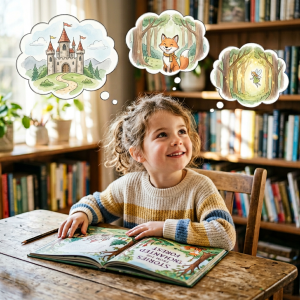
Narration is simply asking your child to tell back what they just read in their own words. No worksheet. No quiz. No prep on your end. Just: “Tell me what happened.”
This practice comes straight from Charlotte Mason’s philosophy, and it works beautifully in a homeschool setting because you have the time and space to actually listen. Start with just a short paragraph or two. Let them stumble through it. That process of pulling the story back from memory and putting it into words is exactly where comprehension gets built.
You will likely find yourself weaving some of the questions we talked about earlier into this narration section. Children sometimes need a bit of prompting in order to start talking. These questions can just the thing to get the narration ball roling.
3. Keep Reading Aloud — Even When They Can Read Alone
I know it can feel like once your child reads independently, the read-aloud days are over. But please don’t stop! Reading aloud together continues to build vocabulary, comprehension, and love of story long into the elementary years — and beyond.
When you read aloud, you can naturally pause, think out loud (“Hmm, I wonder why she did that…”), and invite your child into the conversation. You are modeling the kind of thinking that strong readers do automatically inside their heads.
Not sure what to read aloud together? I have a whole list of wonderful books for you right here.
4. Let Them Show You What They Know
Not every child processes best through talking. Some children love to draw their favorite scene, act out a character, or retell the story using toys or puppets. These creative responses can reveal surprising depth of understanding — and they keep reading time feeling like play rather than school.
Don’t underestimate the power of a simple sketch or a dramatic retelling. That is comprehension in action.
Want a Simple Daily Routine to Pull It All Together?
If you are thinking “This all sounds wonderful, but how do I actually fit it into our day?” — I have got you covered.
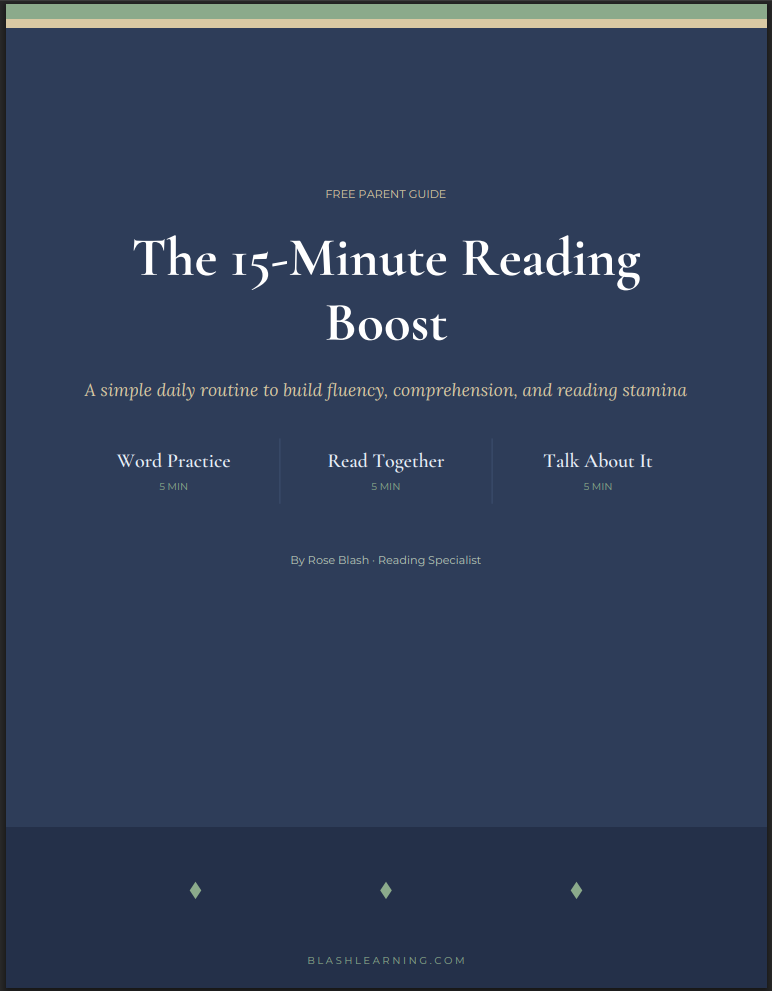
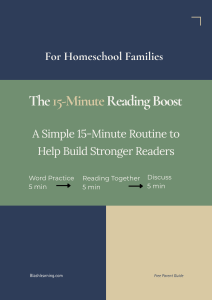
I created The-15 Minute Reading Boost as a free parent guide specifically for homeschooling families like yours. It is a simple, three-part daily routine that takes just 15 minutes:
- 5 Minutes — Word Practice: Build or read a few words together to strengthen decoding skills
- 5 Minutes — Read Together: Practice fluency with a short passage side by side
- 5 Minutes — Talk About the Story: Invite your child to narrate, predict, and connect
That’s it. Short, focused, and doable — even on a full homeschool day with multiple kids to juggle.
You Are the Right Person for This Job
Here is what I want you to hear today: you do not need a fancy curriculum or a teaching degree to raise a confident, capable reader. You just need simple tools, a little consistency, and the willingness to show up — which you are clearly already doing.
Start small. Pick one strategy from this post. Try it today. Read one page together and ask one good question. Listen to your child tell the story back in their own words.
Small steps, practiced with love every day, build remarkable readers. And you are exactly the right person to help your child get there.
Leave a comment or a question below.