How to Teach Your Child to Read at Home: A Complete Guide
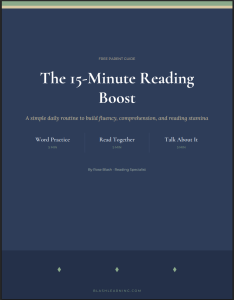
Want a simple, stress-free place to start? Grab my free 15-Minute Reading Boost guide-practical strategies you can use today.
You sit at the kitchen table with your child, a book open between you. But something feels off. Maybe your child is guessing words instead of sounding them out. Maybe they read well but can’t explain the story. or tell you what happened. Or perhaps they’re already upset before you even begin. A little voice in your head might ask, “Am I doing this right? Can I really teach my child to read?”
Take a deep breath, Mama. The fact that you’re here, looking for answers and eager to learn, shows you are perfect for this job. This guide will give you the steps to show you how to teach your child to read at home.
With 25 years of classroom experience and time spent with families like yours, I’ve learned something important: You don’t need a teaching degree to help your child become a confident reader. You don’t need the fanciest curriculum. You don’t have to have everything figured out before you start.
What you need is a clear path that is simple, clear, and made for homeschool life.
That’s the purpose of this guide.
Whether your child is just learning letters or feeling stuck in reading, this guide will support you both every step of the way. We’ll look at what reading is, how to see where your child is now, and what to do next, one step at a time.
No stress. No guesswork. Just a clear path for you and your child.
If you want an easy starting point for tomorrow, check out the free 15 Minute Reading Boost. It’s a simple daily plan made for homeschooling moms like you and fits perfectly with what you’ll read next.
Jump to Section
This guide covers everything you need to teach your child to read at home with confidence. Jump to the section that fits where you are right now.
- What Reading Actually Is and Why It Helps to Know
- Where to Start: Knowing Your Child’s Reading Stage
- Phonics and Phonemic Awareness: The Foundation Every Reader Needs
- Building Reading Fluency: How to Help Your Child Read with Confidence
- Reading Comprehension: Teaching Your Child to Think Inside a Story
- Creating a Simple Daily Reading Routine That Actually Sticks
- Choosing Books and Reading Materials Without the Overwhelm
- When to Give Your Child More Time and When to Seek Additional Support
What Reading Actually Is (And Why It Helps to Know)
Before we start, let’s take a breath together.
If you’ve ever sat with your child, pointed to a word, and wondered, “Why is this so hard? Am I doing something wrong?” you’re not alone. Many homeschool moms share this feeling. The confusion often has nothing to do with you or your child. It comes from not knowing what reading really is.
Here’s the key: reading is not one skill. It is five.
When you grasp this, teaching reading at home becomes clear and manageable.
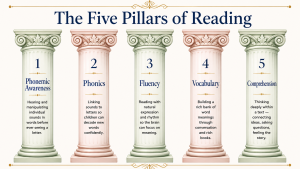
The Five Pillars of Reading
Experts agree that every child who reads well grows in five connected areas. Think of them as five stepping stones across a stream. Your child doesn’t need to master one before moving to the next, but each is important and builds on the previous one.
1. Phonemic Awareness This is the ability to hear and manipulate the individual sounds in words. Before a child ever looks at a single letter, they need to hear that the word “cat” has three separate sounds: /k/ /a/ /t/. This is a listening and speaking skill, and it is the very first foundation.
2. Phonics Once a child can hear sounds, phonics links those sounds to letters and patterns on the page. It’s like a decoding engine. This helps a child tackle new words instead of guessing. Strong phonics instruction is one of the best gifts you can give your beginning reader.
With the pillars of phonemic awareness and phonics, your child can unlock the mystory of letters clustered together. They will decode the words and gain meaning from those words.
3. Fluency Fluency bridges decoding and understanding. A fluent reader glides through text with natural expression and rhythm. They don’t stop to puzzle out each word. When fluency is strong, the brain can focus on deeper meaning.
4. Vocabulary A child might decode a word well but still not know its meaning. Vocabulary is the set of words a child understands. It grows through conversation, read-alouds, and rich books full of lively language. The broader your child’s vocabulary, the more reading opens up for them.
5. Comprehension Comprehension is the main goal. It’s not just about recalling facts. It’s the ability to think within a story, ask questions, connect ideas, and feel what characters feel. This is where reading becomes something your child loves, not something they endure.
These pillars will help you teach your child how to read at home
The best part is, you don’t have to be a teacher to help your child build these skills. You just need to understand where they’re at, make reading a regular part of their day, and use materials that bring stories to life.
This guide will show you how. It’s divided into sections that will walk you through each step of the reading process. You’ll get plain and simple advice on what to look for, what to do, and what comes next. No more feeling overwhelmed or unsure – just a clear path forward.
Want to get started by figuring out your child’s current reading stage? Let’s dive in and take a closer look.
Where to Start: Knowing Your Child’s Reading Stage
You don’t need to be a certified teacher to help your child with reading. Simply stage of reading development, make reading a habit, and choose materials that bring stories alive.
This guide is here to help. It has simple sections that walk you through the reading process step by step. You’ll find practical tips on what to look for, how to progress, and what to do next. No more feeling lost or unsure—just a clear path ahead.
Let’s get started.
One of the most common questions homeschool moms ask me is “How do I know what my child needs?” And it is such a good question, because jumping in at the wrong place is one of the biggest reasons reading instruction feels frustrating for both mom and child.
The encouraging news is that you do not need a formal assessment, a testing kit, or a reading specialist to figure out where your child is. You just need a few quiet minutes of observation and a simple framework to make sense of what you are seeing.
Every child moves through four broad reading stages on their way to becoming a confident, independent reader. Knowing which stage your child is in right now gives you a clear and peaceful starting point.
Stage 1: The Pre-Reader
A pre-reader is not yet connecting letters to sounds, but that does not mean learning is not happening. This is a rich and beautiful season of preparation.
A child in this stage typically:
- Enjoys being read to and will sit for longer stories
- Recognizes their own name in print
- Understands that words on a page carry meaning
- Can rhyme words or play simple sound games
- May pretend to read a familiar book from memory
It is such a joy to watch my grandsons sit down with a book and enjoy looking at the pictures as they try to retell a story. This activity may seem simple but there is a lot going on when a child picks up a book even if they are not reading yet.
What your child needs most at this stage: Read alouds, songs, rhymes, and playful sound games. Think less about letters on a page and more about filling your child’s ear with rich language and story. This is Charlotte Mason’s atmosphere of learning at its most natural and joyful.
Ask yourself these questions:
- Does my child enjoy being read to?
- Can they finish the rhyme if I say “The cat sat on the ___”?
- Do they understand that the words I am pointing to are what I am reading aloud?
If most of your answers are yes, your child is right where they should be as a pre-reader.
Stage 2: The Beginning Reader
At this stage, a child is starting to connect letters and sounds and use that knowledge to read simple words. This is an exciting stage, but it can also feel slow and ful of effort because the child is still building confidence. It is not uncommon for many homeschool moms to feel unsure at this point.
At this stage, a child typically:
- Knows most letter names and is learning their sounds.
- Can sound out short words like cat, sit, and hop.
- Reads slowly, sounding out each letter.
- Sometimes guesses words based on the first letter or a picture.
- Gets tired quickly because decoding takes effort.
What your child needs most now: Regular phonics practice, short daily reading sessions, and plenty of encouragement. Your daily reading habit is vital. Just ten to fifteen focused minutes each day will build more skill than longer, less frequent sessions.
Your gut check questions:
- Can my child sound out simple three-letter words like “map” or “sit”?
- Do they usually know the sound each letter makes?
- Are they trying to decode unfamiliar words instead of skipping them?
If your child is working on these skills, even if it’s not perfect, they’re in the beginning reader stage and moving forward.
Stage 3: The Developing Reader
At this stage, a child can read more words independently but may still read slowly or word by word. They are moving beyond simply sounding out words and are beginning to build fluency, expression, and stronger understanding.
A developing reader may still need help with longer words, unfamiliar vocabulary, and reading smoothly. This is a normal part of the process. The goal is not just for the child to “get through” the words, but to begin reading in a way that sounds natural and makes sense.
At this stage, a child typically:
- Reads simple books with more independence but may still need support with unfamiliar words.
- Begins to read more smoothly with practice, especially after rereading a familiar text.
- Can answer basic questions about what happened in a story or passage.
What your child needs most now is repeated reading, gentle correction, and time to talk about what they read. Encourage your child to reread favorite books, read aloud daily, and pause to discuss the story. This helps build confidence, fluency, and comprehension.
Stage 4: The Fluent and Independent Reader
At this stage, a child reads with more ease, accuracy, and expression. Instead of using most of their energy to figure out each word, they can focus more on understanding, thinking, and enjoying what they read.
A fluent reader is not finished learning. This stage is where children continue to grow their vocabulary, strengthen comprehension, and develop deeper thinking skills. They begin making connections, asking questions, noticing details, and forming opinions about what they read.
At this stage, a child typically:
- Reads with better pace, expression, and accuracy.
- Understands the main idea, important details, and sequence of events.
- Can talk about characters, lessons, new information, or personal connections to the text.
What your child needs most now is access to rich books, meaningful conversations, and opportunities to read for both learning and enjoyment. Ask open-ended questions, introduce new genres, and let your child choose books that match their interests.
Phonics and Phonemic Awareness: The Foundation of Every Reader Needs
If there is one section in this entire guide I want you to read slowly and come back to often, it is this one.
Phonics and phonemic awareness are the engine underneath all of reading. When this foundation is strong, everything else, fluency, comprehension, vocabulary, grows more naturally and with far less struggle. When this foundation is shaky, reading feels like an uphill battle no matter how hard your child is trying.
The good news is that you can build this foundation at home, at your kitchen table, without a formal curriculum or a teaching degree. You just need to understand what you are building and why.
Let’s start at the very beginning.
What Is Phonemic Awareness and Why Does It Come First?
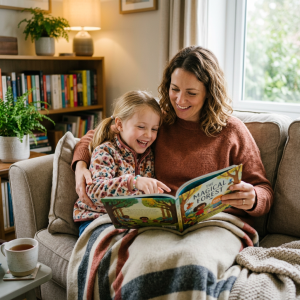
Phonemic awareness is a listening and speaking skill. It has nothing to do with letters on a page. It is simply the ability to hear, identify, and play with the individual sounds in spoken words.
Say the word “ship” out loud. It has three sounds: /sh/ /i/ /p/. A child with strong phonemic awareness can hear those three sounds as separate units even before they ever see the word written down.
This matters enormously because reading is a code. Letters represent sounds. Before a child can crack that code on the page, they need to be comfortable with the sounds themselves in their ear and on their tongue.
Think of it this way. If you tried to learn a foreign language by reading it before you had ever heard it spoken, the written words would feel like meaningless symbols. Phonemic awareness is what makes the written code meaningful. It is the ear training that makes the eye work possible.
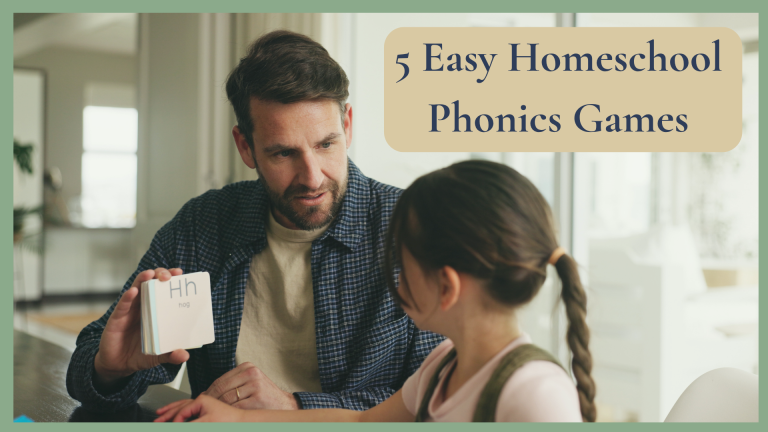
If you want a playful way to support this part of homeschool reading instruction, you might also find this helpful: 5 Easy Homeschool Phonics Games.
A strong phonics foundation usually means your child is sounding out more than guessing and reading familiar words with less strain.
Phonemic Awareness Activities that Will Help You Teach Your Child How to Read
These activities require no materials at all. They are perfect for the car, the dinner table, or a quiet moment on the couch together.
Rhyming Games Say a word and ask your child to think of a word that rhymes with it. Cat, bat, hat, mat. This seems simple, but it builds a child’s ear for sound patterns, which is exactly what early reading requires.
Clapping Syllables Say a word and clap the syllables together. But-ter-fly is three claps. Dog is one. This helps children begin to hear that words are made of smaller parts.
First Sound Isolation Ask your child, “What sound does the word moon start with?” or “What is the first sound you hear in the word fish?” Keep it playful and low pressure. Celebrate every attempt, not just the correct ones.
Blending Sounds into Words Say the individual sounds slowly and ask your child to push them together into a word. “/d/ /o/ /g/ — what word is that?” This is one of the most important pre-reading skills you can practice together.
Segmenting Words into Sounds The reverse of blending. Say a word and ask your child to break it apart into its individual sounds. “How many sounds do you hear in the word ‘cup’?” Hold up a finger for each sound as they say it.
A few minutes of these games several times a week is genuinely enough to build strong phonemic awareness in most young children. Keep it light, keep it joyful, and let it feel like play rather than school.
What Is Phonics and How Do You Teach It Simply at Home?
Once your child has a comfortable awareness of spoken sounds, phonics connects those sounds to the letters and letter patterns they will see on the page. This is the decoding engine we talked about in Section 1.
Phonics instruction does not need to be complicated. In fact, the simpler and more consistent you keep it, the better it tends to work. Here is a gentle sequence to follow:
Start with single consonant sounds. Introduce one letter sound at a time, beginning with the most common consonants. B, m, s, t, and p are great starting points because they appear frequently in simple words and are easy to hear and say clearly.
Introduce short vowel sounds early. The five short vowel sounds, a as in cat, e as in bed, i as in sit, o as in hot, and u as in cup, are the backbone of early reading. Once your child knows a handful of consonant sounds and the short vowel sounds, they can begin blending simple three letter words, and that first moment of independently reading a real word is one of the most joyful things you will ever witness as a homeschool mom.
Move into consonant blends and digraphs. Blends are two consonants side by side where both sounds are heard, like the bl in “black” or the st in “stop.” Digraphs are two letters that make one new sound together, like ch, sh, th, and wh. These open up a much wider world of readable words.
Introduce long vowel patterns gradually. The silent e pattern, like in “cake” and “home,” and common vowel teams like ai, ea, and oa come next. Take these one pattern at a time and give your child plenty of practice with each before moving forward.
Keep lessons short and consistent. Charlotte Mason believed deeply in short, focused lessons, and nowhere is this wisdom more practical than in phonics instruction. Ten to fifteen minutes of focused phonics practice every day will build more skill and more confidence than an hour long session once a week. Your child’s brain needs repetition and rest in equal measure.
What to Do When Your Child Is Skipping Words or Guessing
This is one of the most common concerns I hear from homeschool moms, and it is worth addressing directly because it can feel alarming when you see it happening.
When a child skips a word or guesses based on the first letter or a picture, they are not being lazy or careless. They are doing exactly what their brain has learned to do when decoding feels too hard. They are finding a workaround.
The solution is not to correct them more firmly. The solution is to gently return to the foundation.
Here is a simple approach to try:
Cover the end of the word and show only the beginning. Ask your child what sound the first letter makes, then slowly reveal the rest of the word, sound by sound. This trains the eye to move through the whole word rather than grabbing the first letter and guessing.
Use your finger to track under each sound. Physical tracking helps a child slow down and process each part of the word rather than jumping to a guess.
Praise the attempt, then model the correct decoding. Instead of saying “No, that is not right,” try “Good try! Let’s look at each sound together.” Then work through the word side by side. This keeps the emotional atmosphere of reading time safe and warm, which matters just as much as the skill instruction itself.
Check whether the phonics foundation is solid. If your child is guessing frequently, it may simply mean they have not yet had enough practice with certain sounds or patterns. Go back one step, not as a punishment but as a gift. Give them more time with the sounds they need before pushing forward.
Signs Your Child Has a Strong Phonics Foundation
You will know your child’s phonics foundation is solid when you see these things happening naturally:
- They attempt to sound out unfamiliar words rather than skipping them or asking for help immediately
- They self correct when a word they read does not sound right
- They can read simple words they have never seen before by applying what they know about sounds
- Reading is becoming less effortful and more automatic with each passing week
When you see these signs, it is time to shift more of your focus toward fluency, which is exactly what we will talk about in the next section.
Coming up next: how to help your child move from choppy, effortful reading to smooth, confident, expressive reading.
Building Reading Fluency: How to Help Your Child Read With Confidence
If you have ever listened to your child read and thought “They know all the words, so why does it still sound so choppy?” you have just identified a fluency gap. And you are not alone. This is one of the most misunderstood parts of the reading journey for homeschool moms, because fluency is the stage that sits quietly between decoding and comprehension, and it is easy to miss.
Here is what fluency actually is and why it matters so much.
Reading Fluency: One Key to Teach Your Child How to Read at Home
Reading fluency is the ability to read text accurately, smoothly, and with natural expression. It is not just about reading fast. A child who races through words without expression or meaning is not a fluent reader. A truly fluent reader sounds like someone who understands what they are reading, because they do.
Think about what happens when you read something familiar and comfortable. Your eyes move easily across the page. You do not stop to sound out every word. Your brain is freed up to think about meaning, to feel the emotion in a sentence, to notice when something does not make sense. That ease is fluency.
Now think about what happens when you try to read something in a language you are just beginning to learn. Every word takes effort. By the time you reach the end of a sentence, you have forgotten how it started. That exhausting experience is exactly what reading feels like for a child whose fluency is not yet developed.
When decoding takes all of a child’s mental energy, there is nothing left over for comprehension. This is why a child can read every single word correctly and still not be able to tell you what the passage was about. Fluency is the bridge that connects decoding to understanding, and building it is one of the most important things you can do for your child right now.
What Does Fluency Look Like at Different Stages?
Fluency does not look the same for every child or every age. Here is a gentle guide to help you recognize where your child is:
Early Fluency
Your child is reading simple books with increasing smoothness. They still stop occasionally to decode an unfamiliar word, but they are self correcting and moving forward without getting stuck for long. Reading aloud together still feels like the most comfortable mode.
Developing Fluency
Your child is reading with more natural phrasing and pausing in the right places. They are beginning to use expression when a character speaks or when something exciting happens in the story. Independent reading is becoming more sustainable for longer stretches.
Established Fluency
Your child reads smoothly, expressively, and with obvious comprehension. They self correct naturally when something does not sound right. Reading feels effortless and enjoyable rather than labored and draining.
Simple Ways to Build Reading Fluency at Home
The beautiful thing about fluency practice is that it does not require a special curriculum or complicated materials. The most effective fluency builders are also some of the most joyful reading experiences you can share with your child.
Model Expressive Reading Every Day
The single most powerful thing you can do to build your child’s fluency is to let them hear what fluent reading sounds like. When you read aloud with expression, varying your pace, lowering your voice for a tense moment, speeding up during an exciting chase scene, you are giving your child a living demonstration of what reading can feel like.
Charlotte Mason understood this deeply. She believed that a mother reading aloud with genuine feeling and engagement was one of the richest educational experiences a child could have. You do not need to be a dramatic performer. You simply need to read as though the story matters to you, because it does.
Try Repeated Reading
Repeated reading is exactly what it sounds like. Your child reads the same short passage multiple times until it flows naturally and comfortably. This is one of the most well researched fluency building strategies available, and it works beautifully in a homeschool setting because there is no embarrassment in reading the same page again.
Here is how to make it feel natural rather than repetitive:
- Read the passage aloud together first so your child hears it modeled
- Ask your child to read it back to you independently
- Read it together one more time in unison, matching pace and expression
- Invite your child to read it one final time on their own and notice how much smoother it feels
That progression from hearing, to attempting, to practicing together, to reading independently mirrors the gentle scaffolding that Charlotte Mason described as the ideal learning environment.
Use Poetry for Fluency Practice
Poetry is one of the most underused and most effective fluency tools available to homeschool moms. The natural rhythm and rhyme of a good poem makes it almost impossible to read without expression and flow.
Choose short, joyful poems that your child genuinely enjoys. Read them together in the morning as part of your rhythm. Let your child memorize a favorite poem and recite it. The repetition of working with the same poem over several days builds fluency in a way that feels like play rather than practice.
Robert Louis Stevenson’s collection “A Child’s Garden of Verses” is a particularly wonderful place to start for young readers. The language is rich and beautiful, the poems are short and accessible, and they feel like a warm invitation into the world of words.
Read Together in Unison
Choral reading, or reading aloud together in unison, is a gentle and encouraging way to support a child who is still building confidence. When your voice is alongside theirs, the pressure of performing alone is lifted. Your child can feel the natural rhythm and pacing of fluent reading without having to produce it entirely on their own yet.
Start with just a sentence or two. Let your voices blend. Move through the page together. Over time, gently fade your voice and let theirs carry more of the reading.
Let Your Child Be the Teacher
Ask your child to read a passage aloud to a younger sibling, a stuffed animal, or even the family pet. When a child reads to an audience, even an imaginary one, they naturally slow down, enunciate more clearly, and read with more expression. It is one of the most effortless fluency builders you will find, and children love the feeling of being the one who knows.
What to do When Your Child is Not Reading Confidently
If your child approaches reading time with slumped shoulders, a quiet groan, or the words “Do I have to?”, their fluency likely needs more support. Here is how to respond with gentleness and wisdom.
Lower the level of the text. A child who is struggling with fluency is often reading books that are too difficult. There is no shame in stepping back to simpler text. Reading an easier book with smoothness and joy does far more for fluency development than struggling through a hard one. Confidence is built through success, not through strain.
Shorten the reading session. Ten minutes of joyful, smooth reading builds more fluency than thirty minutes of labored, frustrated reading. If reading time consistently ends in tears or resistance, it is a signal that something needs to adjust, and the first adjustment to try is simply doing less for a season.
Remove the audience pressure. Some children tense up when they feel they are being evaluated. Try reading side by side on the couch with no expectation of a formal reading aloud session. Simply be present with a book you are both enjoying. Let reading feel safe again before you reintroduce any kind of structured practice.
Check the foundation. Fluency struggles are sometimes rooted in phonics gaps that were never fully closed. If your child is frequently stumbling on similar types of words, it may be worth returning gently to the phonics patterns underneath those words before pushing forward with fluency work.
A Note on Reading Stamina
Fluency and stamina grow together. As your child reads more smoothly, they will naturally be able to sustain reading for longer periods without fatigue. But stamina must be built gradually, not forced.
Start with short sessions and celebrate every minute of smooth, focused reading. Add time slowly and only when your child seems comfortable and confident at the current length. Think of it the way you would think of building physical strength. You would not ask a child to run a mile on their first day of practice. You would start with a short joyful run and build from there, one step at a time.
Your child’s reading stamina will grow. Be patient with the pace of that growth, and trust that consistency over time always wins.
Next up: comprehension, the beautiful heart of reading, and the strategies that help your child truly think inside a story.
Reading Comprehension: Teaching Your Child to Think Inside a Story
Here is something I hear from homeschool moms more than almost anything else.
“She reads every word perfectly. But when I ask her what the story was about, she looks at me like I asked her to solve a math problem.”
If that sounds familiar, take a breath. Your daughter is not behind. She is not struggling in a way that should worry you. What you are seeing is simply a comprehension gap, and it is one of the most common and most fixable challenges in the entire reading journey.
Comprehension is not a mysterious gift that some children have and others do not. It is a skill. It is built deliberately, gently, and consistently, right at your kitchen table, one conversation at a time.
What Reading Comprehension Really Is
Reading comprehension is the ability to truly understand what words mean together on a page. It is the difference between a child who reads at a book and a child who reads into it.
A child with strong reading comprehension does not just recall facts. They can tell you why a character made a certain choice. They can predict what might happen next based on clues in the text. They can connect what they read to their own life, to other books, and to the world around them. They can feel what a character feels and carry the meaning of a story forward long after the book is closed.
This is the kind of reading that changes a person. And it is absolutely something you can cultivate at home.
It is also worth noting that comprehension is not just a reading skill. It is the skill that carries your child through every subject, history, science, literature, and beyond. A child who comprehends deeply is a child who learns deeply, across everything.
Why Some Children Struggle with Comprehension
Before we talk about strategies, it helps to understand why comprehension gaps happen in the first place. There are usually a few common reasons.
Decoding Is Still Taking Too Much Energy
As we talked about in Sections 3 and 4, when a child is still working hard to decode words, their brain has very little capacity left over for meaning. If your child’s comprehension improves dramatically when you read aloud to them compared to when they read independently, this is likely the reason. The solution is to continue building phonics and fluency while also doing plenty of read alouds together where comprehension can grow without the burden of decoding.
Vocabulary Gaps
A child cannot comprehend a word they have never encountered before. If your child is reading books with vocabulary that is significantly above their spoken language level, comprehension will suffer. This is one of the reasons Charlotte Mason placed such high value on conversation, read alouds, and rich living books from an early age. The wider a child’s spoken vocabulary, the more of the written world opens up to them naturally.
Passive Reading Habits
Some children learn early that reading means moving their eyes across the page until the page is done. They complete the task without engaging with the meaning. This is not a character flaw. It is simply a habit that was never redirected. The good news is that it responds beautifully to the gentle comprehension strategies we are about to cover.
Simple Comprehension Strategies To Help You Teach Your Child to Read at Home
None of these strategies require a workbook, a quiz, or any special materials. They require only you, your child, and a book you are reading together.
Ask Questions That Spark Real Thinking
The most powerful comprehension tool you have is also the simplest one. It is a good question asked at the right moment.
After reading together, instead of asking “Did you like it?” try questions that invite your child to think more deeply:
- “Why do you think the character made that choice?”
- “What do you think will happen next, and what makes you think that?”
- “Does anything in this story remind you of your own life?”
- “What was the most important part? Why do you think so?”
- “How do you think the character was feeling in that moment?”
These are the kinds of questions that build comprehension from the inside out. They also make for some of the most meaningful conversations you will ever have with your child. Do not rush them. Let the answers come slowly. A child who pauses and thinks before answering is doing exactly the right thing.
Use Narration as Your Primary Comprehension Check
Narration is the Charlotte Mason approach to comprehension, and it is beautifully simple. After reading a passage together, you simply ask your child to tell you what happened in their own words. No worksheet. No multiple choice questions. No quiz. Just a conversation.
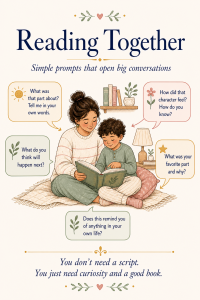
This practice works because the act of pulling a story from memory and putting it into words is exactly where comprehension is built and strengthened. When a child narrates, they are not just reporting back facts. They are organizing, prioritizing, and making meaning. That is deep cognitive work dressed up in a simple conversation.
Start with just a short paragraph or two. Ask “Can you tell me what just happened?” and then listen without interrupting. Let them stumble. Let them circle back. That process of reaching for the story and finding the words is the learning itself.
As your child grows more comfortable with narration, you can extend the length of the passage, invite written narration in older grades, and ask more specific follow up questions to deepen the conversation further.
For a complete guide to narration and how to get started, read this post: What Is Narration in Homeschool? A Simple Charlotte Mason Approach.
Think Aloud Together
One of the most effective things you can do as a homeschool reading teacher is to let your child hear what is happening inside your mind while you read. This is called a think aloud, and it is simpler than it sounds.
As you read aloud together, pause occasionally and share your thoughts naturally:
- “Hmm, I wonder why she did that.”
- “Oh, I think I know what is going to happen next.”
- “That word is new to me. Let me think about what it might mean from the rest of the sentence.”
- “This part reminds me of the book we read last month.”
When children hear a skilled reader thinking out loud, they begin to understand that reading is an active, thinking process, not a passive one. You are modeling the internal conversation that strong readers have with every book they pick up. Over time your child will begin to have that conversation on their own.
Let Them Respond in Ways That Feel Natural
Not every child processes best through words. Some children understand deeply but struggle to articulate what they know in a formal retelling. Honor that.
A child who draws their favorite scene from a chapter is demonstrating comprehension. A child who acts out a story with toys or puppets is showing you what they understood. A child who spontaneously brings up something from a book during an unrelated conversation later that day is proving that the story took root.
Watch for these moments. Celebrate them. They are comprehension in its most natural and joyful form.
How to Help a Child Who Cannot Remember What They Just Read
If your child reads a passage and immediately draws a blank when you ask about it, here is what to try:
Read shorter passages before asking. Instead of reading an entire chapter and then asking for a narration, pause after every few paragraphs. Comprehension is easier to practice in small doses, especially for children who are still building the habit of active reading.
Ask one simple question instead of an open invitation. “Tell me everything that happened” can feel overwhelming to a child who is not yet confident with narration. Try instead, “Tell me one thing you remember.” Just one. That single successful retrieval builds the confidence to reach for more next time.
Read the passage aloud to them first. If your child reads independently and then cannot remember, try reading the same passage aloud to them and asking your question again. If comprehension improves dramatically when listening rather than reading, the issue is likely fluency or decoding rather than comprehension itself.
Give them time to think. Many children need more processing time than adults naturally allow. Ask your question and then wait. Count silently to ten before stepping in. The answer is often there. It just needs a moment of quiet to surface.
The Charlotte Mason Approach to Comprehension
Charlotte Mason believed that children are born with a natural capacity to engage deeply with ideas. She did not believe in comprehension worksheets or reading logs or formal comprehension tests for young children. She believed in living books, rich conversation, and narration.
A living book, in Charlotte Mason’s philosophy, is a book written by someone who genuinely loves their subject. It is written with personality, with feeling, with a distinct voice. It draws the reader in rather than simply presenting information. And it is the kind of book that naturally invites a child to think, to feel, and to connect.
When a child reads a living book and narrates what they have understood, and then discusses it in conversation with a parent who is genuinely curious and engaged, comprehension grows in the deepest and most lasting way possible.
This is not a complicated system. It is a relationship between a child, a book, and a caring adult who asks good questions and listens to the answers. That is something you are already beautifully equipped to offer.
To explore the Charlotte Mason philosophy more deeply, read this post: Who Was Charlotte Mason and Why Does She Still Matter?
For a curated list of living books for your beginning reader, read this post: 10 Best Charlotte Mason Books for a First Grade Reading List.
How to Know If Your Child’s Comprehension Is Growing
You will know comprehension is deepening when you begin to notice these things naturally:
- Your child brings up something from a book during an unrelated moment later in the day or week
- Their narrations become longer, more detailed, and more organized over time
- They begin asking their own questions about what they are reading
- They make connections between books, between books and life, and between books and other subjects
- They show genuine emotional responses to characters and events in a story
- They begin to have opinions about what they read and can tell you why they feel that way
These are not things you can manufacture or rush. They grow quietly and steadily with consistent, joyful, conversation rich reading time. And when you begin to see them appearing, you will know that something truly wonderful is happening in your child’s mind.
Next up: creating a simple daily reading routine that fits your real homeschool life, one that is gentle, consistent, and completely doable even on your hardest days.
Creating a Simple Daily Reading Routine That Actually Sticks
If you have made it this far in this guide, you now have a clear picture of what reading is made of and what your child needs at each stage of the journey. That is no small thing. Many homeschool moms spend years searching for exactly this kind of clarity.
But here is the question I know is sitting quietly in the back of your mind right now.
“This all sounds wonderful. But how do I actually fit it into our day?”
That is the right question. And it deserves a real, practical, honest answer.
The truth is that the most beautifully designed reading instruction in the world will not help your child if it does not happen consistently. Consistency is the ingredient that turns good intentions into real growth. And consistency does not require perfection. It simply requires a rhythm that is gentle enough to sustain on your hardest days and rich enough to matter on your best ones.
That is exactly what we are going to build together in this section.
Why a Daily Reading Routine Matters More Than Any Curriculum
Before we talk about what your routine can look like, I want to say something that I hope lands with real encouragement.
The curriculum you choose matters far less than you think. The reading program, the workbook, the method, none of it will produce a confident reader on its own. What produces a confident reader is a child who sits down with a caring, patient adult and practices reading every single day.
That adult is you. And that daily practice is your routine.
Charlotte Mason understood this deeply. She wrote about the power of habit in education long before modern research confirmed what she observed. Small actions, repeated daily with gentleness and consistency, shape a child’s abilities, attitudes, and character over time. A ten minute reading session every morning, done faithfully day after day, will do more for your child’s reading growth than any expensive curriculum used sporadically.
This is genuinely good news for homeschool moms. Because you do not need the perfect program. You need a simple, doable rhythm that fits your real life.
A Simple Framework for Your Daily Reading Time
The 15 Minute Reading Boost that I created for homeschooling families is built around exactly this philosophy. It is a gentle three part daily framework that takes just fifteen focused minutes and covers the three most essential elements of reading instruction in one simple session.
Here is how it works:
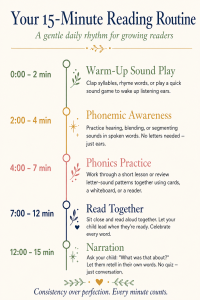
Five Minutes: Word Practice
Start your reading time with a short, focused phonics or word work activity. This could be:
- Practicing a new letter sound or phonics pattern together
- Building simple words with letter tiles or index cards
- Playing one of the phonemic awareness games from Section 3
- Reading through a short list of words that practice a specific pattern your child is working on
Keep this portion playful and low pressure. Five minutes is genuinely enough. You are simply warming up the decoding engine before the real reading begins.
Five Minutes: Read Together
This is the heart of your daily session. Sit side by side and read together. Depending on your child’s stage, this might look like:
- You reading aloud while your child follows along with their finger
- Your child reading aloud to you from a book at their level
- Choral reading together in unison on a passage that is slightly challenging
- Your child reading one sentence and you reading the next, taking turns naturally
Choose books and passages that your child finds genuinely interesting. A child who is curious about what happens next will read with far more engagement and effort than a child working through a passage they find dull. Living books matter here. Interest matters here.
Five Minutes: Talk About the Story
Close every reading session with a brief conversation about what was just read. This is where comprehension, vocabulary, and narration all come together in the most natural way possible.
You do not need formal questions or a discussion guide. Simply ask one of these:
- “Can you tell me what just happened in your own words?”
- “What was your favorite part? Why?”
- “What do you think will happen next?”
- “Did anything in this story surprise you?”
Listen with genuine curiosity. Resist the urge to correct or add information right away. Let your child’s words lead. That five minute conversation at the end of your reading time is doing more comprehension work than any worksheet ever could.
How to Fit Reading Instruction into a Busy Homeschool Day
If you are homeschooling multiple children at different levels, the idea of a daily reading routine can feel logistically overwhelming. Here are some gentle, practical ways to make it work in a real homeschool home.
Anchor Your Reading Time to Something That Already Happens
The most sustainable routines are attached to an existing anchor in your day rather than floating on their own. Consider doing your reading session:
- Right after breakfast, before other lessons begin
- During a younger sibling’s nap time
- Immediately after lunch as a quiet settling activity
- First thing in the morning during your children’s independent work time
You do not need a special reading time slot. You need a consistent moment in your day that already exists and can hold your reading session reliably.
Stagger Your Children’s Reading Sessions
If you have multiple children at different reading stages, you do not need to work with all of them simultaneously. Fifteen minutes with your youngest reader while older children work independently, followed by fifteen minutes with your middle child, is a completely manageable rhythm. Each child gets focused one on one reading time, and you are not stretched thin trying to manage everyone at once.
Use Read Alouds to Teach Everyone Together
Your family read aloud time, when you read a rich living book aloud to all of your children together, counts as reading instruction for every child in the room regardless of their individual reading level. The vocabulary building, the comprehension modeling, the love of story, all of it is happening for your youngest pre-reader and your most fluent independent reader at the same time.
This is one of the most beautiful efficiencies of the Charlotte Mason approach. A good read aloud serves the whole family at once.
What to Do on Hard Days When Your Child Refuses to Read
Let’s talk about this honestly, because it happens in every homeschool home and it can feel deeply discouraging when it does.
Your child sits down for reading time and immediately the resistance begins. Arms crossed. Eyes down. A quiet “I don’t want to.” Or perhaps tears before you have even opened the book.
Here is what I want you to hear first. This is not a sign that you are failing. It is not a sign that your child cannot learn to read. It is a sign that something in the reading experience has started to feel unsafe, overwhelming, or joyless for your child, and that is information you can work with.
Lower the Stakes Immediately
On a hard day, your only goal is to keep reading safe. That is it. Close the lesson plan. Put away the structured session. Pick up a book your child loves and read it aloud to them with no expectation of any response at all. Let them just listen and enjoy. Remind them, and yourself, that reading is a gift, not a performance.
Find the Root of the Resistance
Resistance usually has a reason underneath it. Ask yourself:
- Is the text too hard? A child who is consistently frustrated by the difficulty of what they are reading will eventually refuse to engage with it.
- Is the session too long? Fatigue and overwhelm look a lot like defiance in young children.
- Is there a phonics or fluency gap creating hidden shame? Children who feel like they are always getting it wrong will eventually stop trying.
- Is something else going on emotionally? A child who is tired, hungry, anxious, or carrying something heavy from earlier in the day will not have the capacity for focused reading instruction.
The answer to almost all of these is the same. Back up. Simplify. Shorten. And above all, protect the relationship.
Protect the Relationship Above Everything Else
This is the most important thing I can tell you about hard reading days. Your relationship with your child is the foundation that all learning is built on. A child who feels safe, loved, and unjudged by their reading teacher, who also happens to be their mother, will keep trying even when it is hard.
A child who begins to associate reading time with tension, disappointment, or pressure will find every possible way to avoid it.
So on the hard days, choose connection over curriculum. Read together on the couch with no agenda. Let the fifteen minutes go. The lesson will wait. The relationship must be tended to first.
When reading feels safe again, the learning will follow. It always does.
Grab Your Free Daily Reading Guide
If you are ready to put this rhythm into practice today but want something concrete to hold in your hands, I created the 15 Minute Reading Boost specifically for homeschooling moms like you.
It is a free parent guide that walks you through the three part daily reading framework in simple, clear language. No overwhelm. No complicated instructions. Just a gentle, doable routine you can start using tomorrow morning.
Next up: how to choose the right books and materials for your child without the overwhelm of too many options.
Choosing Books and Reading Materials Without the Overwhelm
If you have ever spent an evening going down a rabbit hole of homeschool reading curricula, emerging two hours later more confused than when you started, this section is for you.
The homeschool market is absolutely saturated with reading programs, decodable readers, phonics workbooks, leveled book sets, and reading curricula of every shape and size. Some of them are wonderful. Some of them are expensive and underwhelming. And almost all of them will tell you that their approach is the one your child needs.
Here is the truth that most of those programs will not tell you.
No single curriculum teaches a child to read. You do. The books and materials you choose are simply tools in your hands. And the best tool is always the one that fits your child, your family, and your daily rhythm, not the one with the most impressive marketing.
Let’s cut through the noise together and talk about what actually matters when you are choosing books and materials for your young reader.
What to Look for in a Good Early Reader Book
Not all books marketed for beginning readers are created equal. Here is what to look for when you are choosing books for your child to practice reading independently.
Decodable Readers
Decodable readers are books written specifically to practice phonics patterns your child has already learned. Every word in a well designed decodable reader can be sounded out using the phonics knowledge the child currently has, which means your child can experience genuine success rather than constant guessing.
These books are not always the most beautifully written or the most exciting stories. But they serve a specific and important purpose. They give your beginning reader a space to practice decoding in a low pressure environment where the text is actually within their reach.
Look for decodable readers that:
- Align with the phonics sequence your child is working through
- Use simple, clear illustrations that support rather than give away the text
- Feel encouraging and manageable rather than frustrating and overwhelming
- Introduce new words gradually rather than jumping ahead of what your child knows
Let me just mention that the decodables is not something Charlotte Mason would advocate. In fact she would likely place most decodables in the ares of twaddle. I want to encourage you to be the final judge in your home. You may decide to use decodables for a short period of time to give your child a sense of accomplishment.
You may decide that you don’t need to use them at all and just lean more heavily into Charlotte Mason methods and inspired materials. Give yourself and your child time. Stay consistent and rest assured you can do this. Don’t be afraid to reach out for support if you need it.
Living Books
This is where Charlotte Mason’s philosophy shines most beautifully. A living book is not a category you will find on a bookstore shelf with that label. It is a quality. It is the quality of a book written by someone who genuinely loves their subject, written with a distinct voice and personality, full of ideas that spark curiosity and conversation.
Living books are not always the easiest books to read. They are often best experienced as read alouds, especially with younger children, while decodable and leveled readers handle the independent reading practice. But they are the books that build vocabulary, comprehension, and love of reading in the deepest and most lasting way.
A living book leaves something behind in a child’s mind long after the last page is turned. That is the mark you are looking for.
Charlotte Mason Living Books Versus Controlled Readers: When to Use Each
One of the most common points of confusion for Charlotte Mason inspired homeschool moms is how to balance living books with the more structured decodable and leveled readers that phonics instruction often requires. Here is a simple framework to help you think about it.
Use decodable and leveled readers for independent reading practice. These are the books your child reads on their own or reads aloud to you during your structured reading session. Their purpose is to build decoding and fluency skills through appropriate practice.
Use living books for read alouds and shared reading. These are the books you read together, your voice carrying the story while your child’s mind engages fully with the meaning, the vocabulary, and the ideas. Living books do not need to be within your child’s independent reading level to be deeply beneficial. In fact, reading books aloud that are above your child’s independent level is one of the most powerful ways to stretch vocabulary and comprehension naturally.
Let your child choose freely during independent reading time. Once your structured session is complete, let your child choose whatever they want to read on their own. A child who chooses their own books is a child who is building a reading life, and that matters more than any particular title or level.
Free and Low Cost Resources You Can Use Today

You do not need to spend a significant amount of money to give your child a rich reading education at home. Here are some of the best free and low cost resources available to homeschooling families.
Your Local Library
This is your single most valuable reading resource and it costs nothing. A good children’s librarian is worth their weight in gold. Do not hesitate to tell them exactly what you are looking for. “I am homeschooling my seven year old and I am looking for living books that will spark her curiosity about nature and history.” A librarian who loves children’s literature will hand you an armful of exactly what you need.
Make library visits a regular and joyful part of your family rhythm. Let your child wander and choose freely alongside the books you select intentionally. The combination of a parent’s curation and a child’s own curiosity is a powerful thing.
Project Gutenberg
Project Gutenberg offers thousands of classic books completely free in digital format. Many of the books Charlotte Mason herself recommended, including Aesop’s Fables, Pilgrim’s Progress, and the works of Beatrix Potter, are available here at no cost. These are living books of the highest quality and they are free to anyone with an internet connection.
Simply Charlotte Mason
Simply Charlotte Mason is a wonderful online resource for Charlotte Mason inspired homeschooling families. They offer free articles, book lists, and guidance on implementing the Charlotte Mason philosophy in your home. It is a trustworthy and generous resource that aligns beautifully with the approach we have been discussing throughout this guide.
Read Aloud Revival
Sarah Mackenzie’s Read Aloud Revival podcast and website is a treasure for any homeschool mom who wants to build a rich read aloud culture in her home. Her book recommendations are carefully curated and her approach to reading aloud is warm, practical, and deeply encouraging. Much of her content is available completely free.
A Note on Choosing a Phonics Program
If you are looking for a structured phonics program to guide your teaching sequence, here are a few things to keep in mind as you evaluate your options.
A good phonics program for home use should:
- Follow a clear, logical sequence from simple to complex
- Include enough practice with each phonics pattern before moving forward
- Be simple enough for a non teacher to use confidently
- Feel manageable within a fifteen to twenty minute daily lesson
- Not require extensive preparation or complicated materials on your part
You do not need the most expensive program. You need the one you will actually use consistently. A simple, affordable program used faithfully every day will always outperform a comprehensive expensive program used sporadically.
And remember, the phonics program is the scaffolding, not the house. The house is the rich reading life you are building together through daily practice, living books, read alouds, narration, and conversation. The program simply gives you a sequence to follow while you build it.
Recommended Books for Your Beginning Reader
Here is a short and carefully chosen list of books that work beautifully for homeschooling families in the early reading years. These are books I return to again and again because they are genuinely good, genuinely accessible, and genuinely loved by children.
For read alouds with young children:
- “The Story of Ferdinand” by Munro Leaf
- “Charlotte’s Web” by E.B. White
- “The Wind in the Willows” by Kenneth Grahame
- “A Child’s Garden of Verses” by Robert Louis Stevenson
For independent reading practice:
- The “Bob Books” series for very beginning readers
- The “Elephant and Piggie” series by Mo Willems for developing readers
- The “Frog and Toad” series by Arnold Lobel for building fluency and comprehension
For a complete curated list of Charlotte Mason inspired books for your first grade reader, visit this post: 10 Best Charlotte Mason Books for a First Grade Reading List.
Next up: how to know when to give your child more time and when to seek additional support, and how to close reading gaps gently and without alarm.
When to Give Your Child More Time and When to Seek Additional Support
There is a question that lives quietly in the heart of almost every homeschool mom, one that does not always get asked out loud because it feels too vulnerable.
“What if something is actually wrong?”
If you have ever lain awake at night wondering whether your child is truly behind, whether you have missed something important, whether you should have caught something sooner, this section is written directly for you.
First, a word of genuine reassurance. The fact that you are asking this question at all is not a sign that you have failed. It is a sign that you are paying attention. And a mother who is paying attention is the single greatest asset a child can have in their reading journey.
Now let’s talk honestly about the difference between a child who needs more time and a child who needs a different kind of support.
Normal Reading Development: What the Timeline Actually Looks Like
One of the greatest sources of anxiety for homeschool moms is comparison. Your neighbor’s child was reading chapter books at five. A child in your homeschool co op is already reading independently at six. And your seven year old is still working through simple three letter words.
Before you allow that comparison to take root, here is what the research on reading development actually tells us.
Reading development varies enormously among typically developing children. Some children are ready to begin formal reading instruction at four or five. Others are not neurologically ready until six, seven, or even eight, and both ends of that range can be completely normal.
Charlotte Mason herself cautioned against pushing formal academics too early. She believed that rushing a child into reading before they were developmentally ready did far more harm than giving them more time. A child who is given the gift of time, rich language, read alouds, and joyful learning experiences in their early years will almost always catch up quickly once they are ready. And they will arrive at reading with their love of learning intact, which matters enormously for everything that comes after.
So before you conclude that your child is behind, ask yourself honestly: behind whom? Behind a standard that was set for a classroom of thirty children where the pace must serve the average? You are not running a classroom. You are nurturing one child, your child, at exactly the pace they need.
Signs Your Child Simply Needs More Time
These are the signs that tell you to take a breath, hold steady, and keep doing what you are doing with patience and consistency.
Progress Is Happening, Just Slowly
If your child is moving forward, even incrementally, that is growth. A child who could not blend sounds six months ago and can now sound out simple three letter words is making real progress, even if it does not feel dramatic. Trust the direction of travel, not just the speed.
Your Child Is Engaged and Willing
A child who sits down for reading time without significant resistance, who tries even when it is hard, who shows curiosity about books and stories, is a child whose relationship with reading is healthy. Willingness and engagement are the soil that reading growth grows in. Protect them above all else.
The Struggle Is Consistent with Their Current Stage
If your child is struggling with exactly the things you would expect them to struggle with at their current reading stage, that is not a red flag. That is simply where they are. A beginning reader who finds blending difficult, a developing reader who stumbles on longer words, these are normal expressions of a child working at the edge of their current ability, which is exactly where learning happens.
They Are Thriving in Other Areas
A child who is curious, creative, engaged in conversation, and growing in other areas of learning is generally a child whose development is on track overall. Reading is one thread in a much larger tapestry. A child who loves nature study, who asks deep questions, who narrates beautifully from a read aloud even when they cannot yet read independently, is a richly developing learner.
Signs That Your Child May Need Additional Support
These are the signs worth paying closer attention to, not with alarm, but with gentle, informed action.
No Progress Despite Consistent Instruction
If you have been providing consistent, patient, daily reading instruction for six months or more and your child does not seem to be making any forward movement at all, that is worth investigating further. Plateaus happen in reading development, but extended plateaus with no movement in any area deserve a closer look.
Significant Difficulty with Phonemic Awareness
Most children develop phonemic awareness fairly naturally through exposure to rhymes, songs, and language play. If your child is six or older and is still struggling significantly to hear rhymes, identify beginning sounds, or blend simple spoken sounds into words despite consistent practice, it may be worth consulting with a reading specialist or educational therapist.
Letter and Number Reversals Beyond Age Seven
Many young children reverse letters like b and d or p and q during the early reading years. This is completely normal up to about age seven. If reversals are still frequent and consistent after age seven despite ongoing instruction, it may be worth having a conversation with your child’s pediatrician or a learning specialist.
Significant Discrepancy Between Listening and Reading Comprehension
If your child understands deeply and narrates beautifully when you read aloud to them, but comprehension falls apart almost entirely when they read independently, and this gap persists even as decoding improves, it may be worth exploring whether there is an underlying processing difference at work.
Physical Signs During Reading
If your child frequently complains of headaches, eye strain, or dizziness during reading, or if they lose their place often, skip lines, or report that the words seem to move on the page, a visit to a developmental optometrist is a worthwhile first step. Vision issues that are not caught by a standard eye chart test can significantly affect reading development and are often overlooked.
Extreme and Persistent Emotional Resistance
Some degree of resistance to reading instruction is completely normal, especially during difficult stretches. But if your child experiences extreme distress, meltdowns, or persistent anxiety specifically around reading tasks, and this has been going on for several months despite your gentlest efforts, it is worth seeking some additional support to understand what is driving that response.
How to Close Reading Gaps at Home
If you have identified an area where your child needs more support, here are some gentle and practical ways to begin addressing it at home before or alongside seeking outside help.
Go Back to the Foundation
Most reading gaps are rooted in an earlier skill that was not fully consolidated before moving forward. If your child is struggling with fluency, go back and check phonics. If they are struggling with comprehension, go back and check fluency. If they are struggling with phonics, go back and check phonemic awareness. Reading is a building. Cracks in the upper floors almost always trace back to the foundation.
Going back is not a punishment or a failure. It is the wisest and most loving thing you can do for your child. Give them the gift of solid ground beneath their feet before asking them to climb higher.
Slow Down and Narrow Your Focus
When a child is struggling, the instinct is often to do more, to add another program, to increase the lesson time, to try a different approach. In most cases, the opposite is more helpful. Slow down. Narrow your focus to the one skill that most needs attention. Do that one thing consistently and patiently before adding anything else.
Make Reading Feel Safe Again
A child who has been struggling with reading for a significant period of time has often developed a layer of shame or anxiety around it that makes the learning itself harder. Before you can address the skill gap, you may need to address the emotional gap.
Spend a season simply reading aloud together with no expectation of your child reading independently. Let them fall in love with stories again. Let reading time be the warmest, safest, most enjoyable part of the day. When the emotional ground is restored, the skill building will go much more smoothly.
Consider a Reading Specialist or Tutor
There is no shame in seeking outside support. In fact, recognizing when your child needs a different set of eyes and a different approach is one of the wisest things a homeschool mom can do. A qualified reading specialist or tutor can assess your child’s specific strengths and gaps and provide targeted instruction that complements everything you are already doing at home.
If you are considering tutoring support, look for someone who has specific training and experience in reading instruction, who takes a warm and relationship based approach with children, and who will communicate clearly and regularly with you about your child’s progress.
You are not handing your child off when you bring in outside support. You are adding to your team. And you remain the most important person on that team, the one who knows your child most deeply and loves them most completely.
A Final Word of Encouragement
I want to close this section, and this entire guide, with something I mean from the bottom of my heart.
You are not going to get every day right. There will be days when the reading session falls apart before it begins. Days when you say the wrong thing or push a little too hard or feel completely overwhelmed by the weight of this responsibility you have chosen to carry.
Those days do not define your child’s reading journey. They are simply the hard days that every homeschool mom walks through, and they pass. I will tell you a little secret. This is the reality for every teacher wether they are in the classroom with a teaching certificate or at home with two or three children and a load of laundry calling her name.
What defines your child’s reading journey is the steady, faithful presence of a mother who shows up day after day with a book in her hand and love in her heart. Who reads aloud even when she is tired. Who celebrates the small wins. Who backs up gently when something is not working. Who protects the joy of reading above all else.
That mother is you. And your child is going to learn to read because of you.
Keep going. One step at a time.
Ready to take your first step? Download the free 15 Minute Reading Boost and start your daily reading rhythm tomorrow morning.