
The Charlotte Mason Approach to Reading Without the Gut Punch
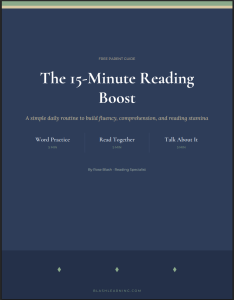
Want a simple, stress-free place to start? Grab my 15-Minute Reading Boost guide; practical strategies you can use today.
Introduction
You have probably heard the name Charlotte Mason floating around your homeschool community. Maybe someone mentioned it in a Facebook group. Maybe you stumbled across it on Pinterest between a recipe for sourdough bread and a printable chore chart. Maybe a fellow homeschool mom said the words “living books” with such reverence that you nodded along politely while quietly wondering what on earth she was talking about.
You are not alone. Charlotte Mason can feel like a secret club with its own language, its own book lists, and its own devoted following who speak of narration and atmosphere the way other people talk about their morning coffee. Essential. Life-giving. Non-negotiable.
But here is what nobody tells you at the beginning.
Charlotte Mason’s approach to reading is not complicated. It is not reserved for experienced educators or scholarly homeschoolers with floor-to-ceiling bookshelves and a working knowledge of Victorian literature. It is a warm, practical, beautifully simple philosophy that fits right inside your real life, at your real kitchen table, with your real child who may or may not be cooperating today.
This complete guide will walk you through everything you need to know about the Charlotte Mason approach to reading, from the foundational philosophy to what it looks like on a regular Tuesday morning in your homeschool. By the time you finish reading, you will not just understand what Charlotte Mason reading is. You will know exactly how to bring it to life for your family.
And if you want something simple and practical to start using tomorrow morning, grab the free 15 Minute Reading Boost before you dive in. It is a gentle daily reading framework rooted in the same Charlotte Mason principles we are about to explore together.
Jump to Section
Jump to the section that fits where you are right now.
- What the Charlotte Mason Approach to Reading Actually Is
- Charlotte Mason’s View of the Child as a Reader
- What Are Living Books and Why Do They Matter
- The Role of Read Alouds in Charlotte Mason Reading
- Narration: Charlotte Mason’s Primary Comprehension Tool
- Building a Charlotte Mason Reading Atmosphere at Home
- A Simple Charlotte Mason Daily Reading Rhythm
- Charlotte Mason Reading at Every Stage
- Common Questions Homeschool Moms Ask About Charlotte Mason Reading
What the Charlotte Mason Approach to Reading Actually Is
Charlotte Mason was a British educator who lived from 1842 to 1923. She spent her life studying children, observing how they actually learn, and developing a philosophy of education that honored both their minds and their hearts. Her ideas were considered revolutionary in her time and, if we are being honest, they are still a little revolutionary today.
But what exactly is her approach to reading? And why do so many homeschool moms feel like it changed everything for their families?
More Than a Method: A Philosophy
Here is the first and most important thing to understand. Charlotte Mason did not create a reading program. She did not design a curriculum with a teacher’s manual, a scope and sequence, and a set of comprehension worksheets to photocopy.

With prayer and observation, she developed a philosophy. She allowed her Christian worldview to shape a way of thinking that influenced how she thought about children.
That distinction matters enormously because it means the Charlotte Mason approach to reading is not a rigid system you follow step by step. It is a set of deeply held convictions about children, about books, and about the reading life worth building.
Those convictions shape every choice you make, from which books you place in your child’s hands to how you respond when they tell you what the story meant to them.
The philosophy is simple enough to summarize in one sentence. Children deserve real books, rich ideas, and meaningful conversations, and when they receive these things consistently, they grow into readers who love reading for the rest of their lives.
That is it. Everything else flows from there.
What Makes Charlotte Mason Reading Different
Most conventional reading instruction is organized around skill acquisition. You teach decoding, then fluency, then comprehension strategies. You measure progress with assessments. You move through levels. You check boxes.
None of this is wrong, exactly. Skills do matter, and we will talk about how Charlotte Mason addressed them. But Charlotte Mason saw reading through a much wider lens.
In her philosophy, reading is not primarily a skill to be mastered. It is a relationship to be cultivated. A relationship between your child and the world of ideas, stories, unforgettable characters, history, science, poetry, and living language that books make accessible. The goal is not a child who can read. The goal is a child who does read, eagerly, joyfully, and for their own genuine pleasure and growth.
To this day, my daughter enjoys picking up a book that she can immerse herself in. She often speaks of the days when she was young and busy discovering living books. She relishes those moments when she picks up a book and laughs out loud at the antics of the friends she made in the story. Oftentimes. The poetic language of a story brought her great joy.
This is the goal of every parent’s heart. I’m sure you can relate. I was thankful for the Charlotte Mason elements I could put in place. This has marked children for life. What a wonderful gift to give our children.
When you start with that goal, everything about how you approach reading instruction shifts most wonderfully.
The Five Pillars of Charlotte Mason Reading
While Charlotte Mason’s philosophy is rich and layered, her approach to reading rests on five central practices that work together beautifully. Think of them as five threads woven into a single piece of cloth. You can study each one separately, but their real power comes from how they work together.

Living books as the primary reading material, books written with genuine feeling and literary quality rather than controlled vocabulary and manufactured stories. The author of these books has a deep passion for the subject. They have spent valuable time coming to a rich understanding of the subject matter.
Read-alouds as a daily practice: the parent’s voice carries rich language and story into the child’s mind and heart every single day.
Narration as the primary comprehension tool, the child telling back what they heard or read in their own words, rather than filling in blanks on a worksheet.
Short, focused lessons that protect attention and leave the child wanting more rather than dreading what comes next.
A rich reading atmosphere that makes books feel like a natural and beloved part of daily life rather than an assigned task to be completed and forgotten.
We are going to explore each of these in depth throughout this guide. But first, let’s talk about the conviction that holds all five of them together.
For a deeper introduction to who Charlotte Mason was and why her ideas continue to shape homeschools around the world, read this post: Who Was Charlotte Mason and Why Does She Still Matter?
Charlotte Mason’s View of the Child as a Reader
Before Charlotte Mason talked about books, methods, or schedules, she talked about children. And what she believed about children is the foundation that makes her entire approach to reading make sense.
Children Are Born Persons, Not Empty Vessels
Charlotte Mason’s most famous and most foundational conviction is captured in four words. Children are born persons.
Not projects waiting to be optimized. Not test scores waiting to be improved. Not empty vessels waiting to be filled with the right content in the right sequence. They are not something to be standardized. Persons. Whole, thinking, feeling, curious human beings who arrive in the world already reaching toward meaning, story, and beauty.
This belief changes everything about how you approach reading instruction. If your child is a person, then the books you offer them should treat them like one. Rich language. Real ideas. Stories with genuine emotion and complexity. Not watered down, not simplified beyond recognition, not stripped of everything interesting in the name of controlled vocabulary.
A child who is seen as a person deserves a person’s reading life.
Children Deserve Real Books

Because Charlotte Mason believed children were capable persons, she trusted them with real books. Not the kind of early reader where every sentence is five words long, and the plot involves a dog named Bop finding his red ball. Real books. Those read-along books are books with beautiful language, things happen that matter, and children laugh out loud or sit very still and think.
It is a rich experience to watch children fix their gaze on the reader or the page of a book as a story unfolds. When a child is allowed to hear the words from an engaging story, their minds are busy building the pictures and even feeling the breeze or the warmth of the sunlight on their skin. This is a beautiful part of the reading experience.
Charlotte Mason understood something that modern brain research has since confirmed. Children rise to the occasion. They meet the challenge that is set before them.
When we consistently offer children rich, beautifully written books and read those books aloud with expression and care, children’s vocabulary, comprehension, and love of reading all grow in ways that no phonics worksheet has ever managed to produce on its own.
This does not mean you hand a six-year-old a Victorian novel and wish them luck. It means you choose books with genuine literary quality at an appropriate level, and you read the richer, more complex books aloud together so your child can experience great language before they can decode it independently.
Reading Should Protect and Grow Curiosity

Charlotte Mason was deeply concerned about anything in education that killed a child’s natural curiosity. And she had a lot to say about the ways well-intentioned adults accidentally do exactly that.
Forcing a child to read before they are developmentally ready. Using reading as punishment. Drilling comprehension questions in a way that turns a beautiful story into an interrogation. Assigning books so dry and lifeless that a child finishes them convinced that reading is something to be endured rather than enjoyed.
All of these things, she argued, damage the relationship between a child and books in ways that can take years to repair.
The Charlotte Mason approach protects curiosity by keeping reading joyful, lessons short, books wonderful, and the emotional atmosphere of reading time warm and safe. A child who feels safe and engaged during reading time will keep reaching for books. A child who dreads it will find every possible reason to be somewhere else.
Sound familiar? If you have a child who resists reading time, this section of Charlotte Mason’s philosophy is especially worth holding onto.
What Are Living Books and Why Do They Matter
If you have spent any time in Charlotte Mason circles, you have heard the term living books. It is possibly the most-used and least-explained term in the entire Charlotte Mason vocabulary. Let’s fix that.

The Definition of a Living Book
A living book is not a category on a bookstore shelf. You will not find a section labeled living books between young adult fiction and self-help. Living books are a quality, a way of describing what makes a book genuinely nourishing for a child’s mind and heart.
Charlotte Mason described a living book as a book written by a single author who loves their subject deeply and writes about it with personality, feeling, and a distinct voice. A living book is not trying to deliver information. It is trying to share something the author genuinely cares about with a reader they genuinely respect.
When you pick up a living book, something happens. The prose feels alive. The ideas feel real. The characters feel like people you might actually meet or might already know. The subject, whether it is history, science, poetry, or adventure, feels like something worth caring about rather than something worth memorizing for a test.
I recall being drawn into my mother’s stories about her family and the challenges they endured. These were people that she knew because they were her family. Even if I had not met them, they were still important because they were important to her. I could hear her passion, anger, or excitement as she told the stories. This marked me. At the time, I didn’t realize I was being drawn into living history.
It is the same when we share living literature. Our children hear the characters’ sadness or joy, and they are drawn in. They pay close attention because they want to find out how the situation resolves.
That quality, that aliveness, is what Charlotte Mason was pointing to. And children recognize it immediately, even if they would never use the word to describe it. They know when a book is good.
Living Books Versus Twaddle
Charlotte Mason used a wonderfully expressive word for the opposite of a living book. She called it twaddle.
Twaddle is the kind of writing that talks down to children. It is oversimplified, shallow, and written without genuine care for the reader or the subject. It assumes children cannot handle complexity, nuance, or real emotion, so it strips them out and leaves behind something flat and forgettable.
You know twaddle when you read it. It is the early reader in which every page contains exactly one sentence, and that sentence contains exactly one idea, and that idea is so obvious that nobody needed to write it down. It is the nonfiction book that presents a fascinating topic in language so cautious and controlled that all the fascination has been carefully removed.
Charlotte Mason believed children deserved better. And she was right. Children who are consistently offered twaddle gradually stop expecting anything interesting from books. Children who are consistently offered living books gradually develop the expectation that books are worth reading, which is exactly the expectation you want them to carry with them for the rest of their lives.
Living Books Versus Dry Textbooks
Charlotte Mason was also cautious about the kind of dry, encyclopedic textbook writing that presents information without personality or feeling. This is not because facts do not matter. They absolutely do. It is because information presented without context, without a story, without a human voice behind it tends to produce surface-level memorization rather than genuine understanding.
Think about your own experience. Which do you remember more vividly, the dates and definitions you memorized for a history test, or the story your grandmother told you about what it was like to live through a particular moment in history? Living books work like your grandmother’s story. They embed information within narrative, feeling, and personality, which is exactly how human brains are wired to receive and retain it.
How to Find Living Books for Your Homeschool
Here is the practical question every homeschool mom eventually asks. How do I find living books? How do I know one when I see it?
Here are a few simple ways to identify and find living books for your family.
Read the first page aloud. If the language flows naturally and you find yourself genuinely interested in what comes next, it is probably a living book. If you find yourself reading in a flat monotone because there is nothing in the prose to make your voice do anything interesting, it probably is not.
Check the author’s relationship to the subject. Living books are almost always written by someone who genuinely loves what they are writing about. A nature book written by a lifelong naturalist. A history book written by someone who finds this period endlessly fascinating. That love comes through on every page.
Ask a Charlotte Mason community. The Charlotte Mason homeschool community is enormously generous with book recommendations. Online communities, blogs, and curated reading lists abound, and most of them have been tested by real homeschool families with real children who gave real feedback.
Trust your local librarian. A good children’s librarian who knows their collection can hand you an armful of living books in about five minutes if you tell them what you are looking for. Do not underestimate this resource.
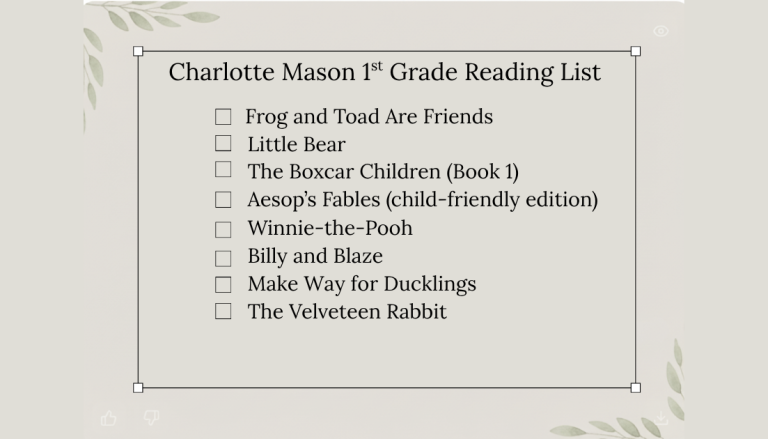
For a carefully curated list of living books for beginning readers, visit this post: 10 Best Charlotte Mason Books for a First Grade Reading List.
Children Are Born Persons, Not Empty Vessels
Charlotte Mason’s foundational conviction that children are born persons shapes everything about her approach to reading instruction. A child is not a container waiting to be filled with phonics rules and vocabulary lists. A child is a thinking, feeling, curious person who is already reaching toward meaning and story from their very earliest days.
Children Deserve Real Books
Because Charlotte Mason saw children as capable persons, she believed they deserved real books, books written with genuine feeling and literary quality, not dumbed-down texts designed to deliver controlled vocabulary. She trusted children to rise to meet a good book when it was presented at the right time and in the right way.
Reading Should Protect and Grow Curiosity
Charlotte Mason was deeply concerned about anything in education that killed a child’s natural curiosity. Forced reading, reading above a child’s readiness, using reading as punishment, or drilling comprehension questions in a way that made reading feel like a test were all things she cautioned against. Reading should leave a child wanting more, not less.
The Role of Read Alouds in Charlotte Mason Reading
Let’s talk about one of the most powerful and most enjoyable things you can do for your child’s reading development.

It costs nothing. It requires no special materials. It does not demand a teaching degree or a carefully planned lesson. It simply asks you to sit down with your child, open a good book, and read it aloud with feeling.
That is it. That is the practice. And Charlotte Mason considered it one of the most important educational gifts a parent could offer a child.
If you have ever felt guilty about spending 30 minutes reading aloud to your children instead of working through a formal lesson, this section will set you free.
Why Charlotte Mason Made Read Alouds Central to Her Philosophy
Charlotte Mason did not suggest read-alouds as a nice supplement to real learning. She placed them at the very heart of her educational philosophy because she understood something that modern brain research has since confirmed. The human brain is wired for story. It receives, retains, and connects information far more effectively when that information arrives wrapped in narrative, language, and feeling.
When you read aloud to your child with expression and genuine engagement, several remarkable things happen simultaneously.
Your child’s vocabulary grows naturally without a single vocabulary worksheet in sight. Words they would never encounter in their own independent reading enter their mind through your voice, carried in by the context of a story that makes their meaning clear and memorable.
Your child’s comprehension deepens because they can focus entirely on meaning without the cognitive burden of decoding. The processing power that would normally be spent sounding out words is freed up completely for thinking, feeling, and connecting.
Your child’s love of reading grows because they are experiencing books at their most enjoyable, heard in a warm voice, in a comfortable place, without any pressure to perform or produce.
Charlotte Mason understood all of this intuitively long before neuroscience could explain it. She watched children and paid attention to what made them thrive.
Read Alouds Are for Every Age, Not Just Little Ones
Here is a misconception worth addressing directly because it causes many homeschool families to give up one of their most powerful educational tools far too soon.
Read-alouds are not just for young children who cannot yet read independently.
Charlotte Mason read aloud to students of every age, including teenagers, because she understood a simple truth. The books worth reading aloud together are almost always richer, more complex, and more beautiful than what a child can access on their own at any given stage. A ten-year-old who reads independently at a solid level can still experience far more profound literature through a parent’s read-aloud voice than they could navigate on their own.
Think about it this way. A nine-year-old reading independently might comfortably manage books written at a third- or fourth-grade level. But that same nine-year-old can fully engage with the ideas, characters, and emotional complexity of a book written at a much higher level when a parent reads it aloud with expression and pauses for natural conversation along the way.
Read-alouds stretch vocabulary, comprehension, and love of literature at every age. They are not a stepping stone to real reading. They are real reading, and they belong in your homeschool from the first day to the last.
How to Read Aloud the Charlotte Mason Way
Charlotte Mason had a great deal to say about the quality of a read-aloud experience, not just the quantity. She was not simply advocating for parents to read words off a page in the general direction of their children. She was advocating for something much more intentional and much more alive.
Here is how to bring that intention to your own read-aloud practice.
Choose Books Worth Reading Aloud
The first step happens before you ever open your mouth. It happens when you choose the book.
A Charlotte Mason read-aloud should be a living book, written with a distinct voice, genuine feeling, and literary quality that gives your reading something to work with. When the language is beautiful, reading it aloud naturally becomes expressive. When the story is genuinely interesting, your engagement as a reader is real rather than performed. And Donna, your child will notice the difference immediately.
If you find yourself reading in a flat monotone because the book gives your voice nothing interesting to do, that is useful information. It may be time to find a different book.
Read with Genuine Expression
You do not need to be a trained actor or a dramatic performer to read aloud well. You need to read as though the story matters to you, because it does.
Let your voice slow down during a tender moment. Let it speed up slightly during an exciting chase. Lower it to almost a whisper when something important and quiet is happening. Pause after a surprising plot turn and let the silence do some work before moving on.
These are not theatrical tricks. They are the natural responses of a reader who is genuinely inside the story. And when your child hears those responses in your voice, they learn what it feels like to be inside a story, too.
Pause for Natural Conversation, Not Interrogation
One of the most important words in that heading is natural. Charlotte Mason was not an advocate for stopping every few pages to fire comprehension questions at a child. That approach turns a joyful shared experience into something that feels uncomfortably like a quiz, and children notice that shift in atmosphere immediately.
Instead, pause when something genuinely moves you. When a character makes a surprising choice, you might say, “I did not see that coming. Did you?” When a beautiful sentence lands with particular force, you might read it again slowly and let it sit for a moment. When your child wants to share a thought or ask a question, welcome it warmly and follow where the conversation leads.
This is narration in its most natural and conversational form. It is not a structured activity. It is simply two people, both inside a story, talking about what they are experiencing there.
Let Your Child See You Loving It
This may be the most underrated aspect of the read-aloud experience, and the one Charlotte Mason would have considered most essential of all.
When your child sees you genuinely moved by a story, genuinely delighted by a beautifully turned phrase, genuinely invested in what happens to a character, they receive something no curriculum can teach. They receive a living demonstration that books are worth caring about. That reading is something an adult who has access to every other form of entertainment still chooses to do. Those stories matter.
That demonstration, repeated day after day over years of shared reading, builds a relationship between your child and books that will last their entire life.
What to Do After the Read Aloud
The read-aloud itself is the main event, but what happens in the few minutes after you close the book can be just as valuable if you handle it with a light, natural touch.
Invite a Simple Narration
Ask your child to tell you what just happened in their own words. Keep the invitation casual and warm. “Can you tell me what happened in that chapter?” or “What was your favorite part?” are both perfectly good starting points. Let their response lead the conversation rather than steering it toward specific answers you have in mind.
Ask One Good Question
If narration feels like too much on a particular day, ask one genuine question about what you just read. Make it a question you are actually curious about, rather than one you already know the answer to. Children can tell the difference, and they respond far more openly to genuine curiosity than to a comprehension check disguised as conversation.
Let It End There
Sometimes the most Charlotte Mason thing you can do after a read-aloud is simply close the book, sit quietly for a moment, and let the story settle. Not every reading experience needs to be processed immediately. Some of the deepest comprehension happens in the quiet aftermath of a good story, in the car on the way to the grocery store, an hour later, when your child suddenly says, “I think I know why he did that.”
Trust the story to do its work. It usually does.
Building a Daily Read Aloud Habit
Charlotte Mason was a firm believer in the power of daily habits over occasional grand gestures. A read-aloud that happens every day for 15 minutes will do more for your child’s reading development than a 2-hour reading marathon once a week.
Here are some simple ways to build a consistent daily read-aloud habit that fits your real homeschool life.
Anchor It to an Existing Routine
The most sustainable habits are attached to something that already happens reliably in your day. Consider reading aloud right after breakfast before the school day begins, immediately after lunch as a settling transition, or in the evening after dinner as a natural wind down. Choose a time that feels calm and unhurried rather than squeezed between other pressing obligations.
Keep a Read Aloud Basket
Keep a small basket or shelf near your read-aloud spot with your current read-aloud book and a few poetry collections. Having the books visibly present and easily accessible removes the small friction of finding them that can sometimes be enough to derail a habit on a busy day.
Read Even When You Can Only Manage a Little
On days when everything is hard and the homeschool day hasn’t gone according to any plan you made, read one page. Read one paragraph. Read one poem. Something is always better than nothing, and a one-page read-aloud on your hardest day still tells your child that books matter in this home. That message compounds beautifully over time.
Recommended Read-Aloud Books to Start With
Choosing your first Charlotte Mason read-aloud does not need to be complicated. Here are a few beautifully written living books that work wonderfully as family read-alouds and tend to capture children’s attention from the very first chapter.
For young children just beginning their read-aloud journey, Beatrix Potter’s Peter Rabbit stories are a perfect, gentle starting point. The language is beautiful, the stories are short enough to hold a young child’s attention completely, and Potter’s genuine love of the natural world comes through on every page.
For children in the middle years, E.B. White’s Charlotte’s Web is one of the most universally beloved read-alouds in English. It is funny and tender and profound in equal measure, and it will almost certainly make you cry at least once, which is not a warning but a promise.
For older children and families who want something with more narrative sweep, Kenneth Grahame’s The Wind in the Willows offers some of the most exquisite prose in children’s literature and chapters that reward slow, expressive reading most satisfyingly.
For poetry woven into your daily read-aloud rhythm, Robert Louis Stevenson’s A Child’s Garden of Verses remains one of the most joyful and accessible collections for young readers and makes a wonderful five-minute morning read-aloud that sets a warm tone for the whole school day.
For a complete curated list of Charlotte Mason living books perfect for read-alouds, visit this post: 10 Best Charlotte Mason Books for a First Grade Reading List.
Next up: narration, Charlotte Mason’s primary comprehension tool and the beautifully simple practice that replaces worksheets and quizzes with something far more powerful, a real conversation.
Narration: Charlotte Mason’s Primary Comprehension Tool

Let’s talk about the practice that Charlotte Mason considered so essential that she built her entire approach to comprehension around it.
No flashcards. No fill-in-the-blank worksheets. No multiple-choice questions with four possible answers and a timer running in the background.
Just a conversation.
If that sounds too simple to be effective, you are about to be wonderfully surprised. Narration is one of the most powerful comprehension-building tools ever developed for young learners, and the research accumulated over the century since Charlotte Mason first described it has done nothing but confirm what she already knew.
*Narration sits at the very heart of the Charlotte Mason approach to reading, and it is one of the first practices worth making your own.
When a child tells you what they just read or heard in their own words, something remarkable happens in their brain. Something that no worksheet has ever been able to replicate.
What Narration Is in Simple Terms
Narration is simply asking your child to tell you what happened after reading or listening to a passage together. That is genuinely all it is.
You read a chapter together. You close the book. You ask your child to tell you what happened in their own words. They tell you. You listen. That is a narration.
Charlotte Mason encouraged the listener to listen for details and other nuances the reader might add. Your young reader will begin to add more and more to their narration.
No rubric. No right answer. No grade at the bottom of the page. Just your child reaching into their memory, pulling out what they understood, and putting it into their own language.
Charlotte Mason called this telling back, and she considered it the most natural and most effective way to develop a child’s comprehension, memory, and ability to organize and express ideas. She used it with children of every age and ability level because she understood that narrating is not just a way to check comprehension. It is the very process by which comprehension is built and deepened.
Why Narration Works Better Than Comprehension Worksheets
This is the question every homeschool mom eventually asks when she first encounters narration. It seems so simple. How can just talking about a book be more effective than a structured comprehension activity?
Here is the honest answer.
When a child fills in a worksheet, they are responding to someone else’s questions about someone else’s priorities in the text. They are searching for specific, predetermined answers rather than constructing their own understanding. The cognitive work they are doing is recognition and retrieval, which are relatively shallow forms of thinking.
When a child narrates, something entirely different happens. They must hold the whole passage in their mind simultaneously. They must decide what is most important. They must organize the information into a coherent sequence. They must find the words to express what they understood. And they must do all of this without any scaffolding from a question that points them toward the answer.
That is genuinely demanding cognitive work. It is the kind of thinking that produces deep, lasting comprehension rather than surface-level recall that evaporates by the following morning.
*The Charlotte Mason approach to reading has always understood this intuitively. Modern cognitive science has since confirmed it. The act of retrieving information from memory and expressing it in your own words is one of the most powerful learning strategies available, and it costs absolutely nothing and requires no materials whatsoever.
If you have been spending time and money on comprehension workbooks and feeling vaguely guilty that reading time never quite feels like enough, this is your permission to let them go.
Getting Started with Narration for the First Time
If narration is new to your homeschool, the most important thing to know is this. Start smaller than you think you need to.
Most moms who try narration for the first time read an entire chapter and then ask their child to tell them everything that happened. The child stares back with an expression that suggests they have suddenly forgotten the entire English language. The mom concludes that narration does not work. Neither of them is right. The passage was too long for a first attempt.
Here is an appropriate sequence for introducing narration in your homeschool.
Week One: One Paragraph at a Time
Read a single short paragraph aloud to your child. Then close the book and ask one simple question. Not “tell me everything” but something specific and manageable. “What happened to the rabbit in that paragraph?” or “What did the character decide to do?” Just one question with one answer. Celebrate whatever your child gives you, even if it is brief and imperfect.
Week Two: A Short Passage
Once your child is comfortable responding to a single paragraph, extend to three or four paragraphs before pausing for narration. This time, try the open invitation. “Can you tell me what just happened?” Listen without interrupting. Resist the urge to fill in the gaps or correct details. Let their version of the story be their version.
Week Three and Beyond: Building the Habit
Gradually extend the length of the passage as your child’s confidence grows. Add richer follow-up questions as narration becomes a natural part of your reading rhythm. “Why do you think the character made that choice?” “What do you think will happen next?” “Did anything in this passage surprise you?”
Within a few weeks, narration will begin to feel as natural as any other part of your reading time. And you will start to notice something wonderful. Your child’s narrations will become richer, more detailed, and more thoughtful with every passing week, not because you are teaching them more, but because the habit of paying attention and telling back is sharpening their comprehension from the inside out.
Narration Ideas for Younger and Reluctant Narrators
Not every child takes to oral narration immediately, and that is completely normal. Some children are naturally verbal and will narrate enthusiastically from the very first attempt. Others need a gentler on-ramp. Here are some wonderful alternatives for the child who freezes up when asked to tell back a story.
Draw and Tell
Ask your child to draw their favorite part of what was just read, then have them tell you about their drawing. The drawing gives them something concrete to look at and talk about rather than having to pull the whole story from memory. Many children narrate far more naturally and in much greater detail when they have a visual anchor to refer to.
Act It Out
Let your child use toys, puppets, or their own body to act out what happened in the passage. This is narration in its most physical and joyful form, and it works beautifully for kinesthetic learners who process information through movement rather than words.
Sentence Starters
Offer your child the beginning of a sentence and let them complete it. “First the character…” or “The most important thing that happened was…” These simple scaffolds remove the paralysis of not knowing where to begin and give the child just enough structure to launch their narration confidently.
Narrate to a Stuffed Animal
Ask your child to tell the story to a stuffed animal or a doll rather than directly to you. Removing the perceived evaluation of a parent’s listening removes an enormous amount of pressure for some children and allows narration to feel genuinely playful rather than performative.
Narration at Different Ages and Stages
One of the most beautiful things about narration as a practice is that it grows and evolves with your child rather than becoming obsolete at a certain age. Charlotte Mason used narration with children from the earliest years through secondary education, simply adapting the form to match the child’s developing abilities.
Early Years, Ages Four Through Seven
Narration at this stage is entirely oral and entirely gentle—short passages, simple questions, and enthusiastic celebration of every attempt. The goal is to build the habit of paying attention and telling back. Do not worry about completeness or accuracy at this stage. The habit matters far more than the performance.
Middle Years, Ages Eight Through Eleven
As your child grows more confident with oral narration, you can begin introducing written narration alongside it. Ask your child to write two or three sentences about what they read before discussing it aloud. Written narration develops not just comprehension but also the ability to organize and express ideas on the page, which is foundational for all future writing.
Upper Years, Ages Twelve and Beyond
At this stage, narration naturally evolves into more formal written expression. A narration of a history chapter could be condensed into a paragraph summary. A narration of a literature passage might become a character analysis. An oral narration of a science observation might become a written lab report. Charlotte Mason’s narration is the seed from which all of these more formal writing skills grow naturally over time.
What to Do When Your Child Struggles with Narration
If your child consistently struggles with narration despite your gentlest efforts, here are a few things worth considering before you conclude that narration does not work for your child.
Check the book first. A child who cannot narrate a passage may not be interested in the book. Charlotte Mason was very clear that living books produce rich narrations and twaddle produces nothing. If narration is consistently thin and reluctant, it may be worth evaluating whether the book is genuinely engaging for your particular child.
Check the passage length. When in doubt, make it shorter. There is no passage too short for a narration attempt and no narration too brief to be valuable. A single sentence about what just happened is a successful narration for a child who is just beginning.
Check the pressure level. Children narrate most freely when they feel completely safe from judgment or correction. If your child senses that there is a right answer they might miss, narration will feel like a test rather than a conversation. Keep your tone genuinely curious and genuinely warm, and watch the difference it makes.
Check your own patience. This is the hardest one to hear, but the most important. Narration requires waiting. It requires silence while a child thinks. It requires resisting the urge to prompt, correct, or fill in the gaps. The children who struggle most with narration are often simply the children who have never been given enough quiet to gather their thoughts. Give them more time than feels comfortable, and you may be surprised by what surfaces.
*Narration is not a test of your child or of you. It is simply the Charlotte Mason approach to reading in its most joyful and natural form: a child, a book, and a caring adult who is genuinely listening.
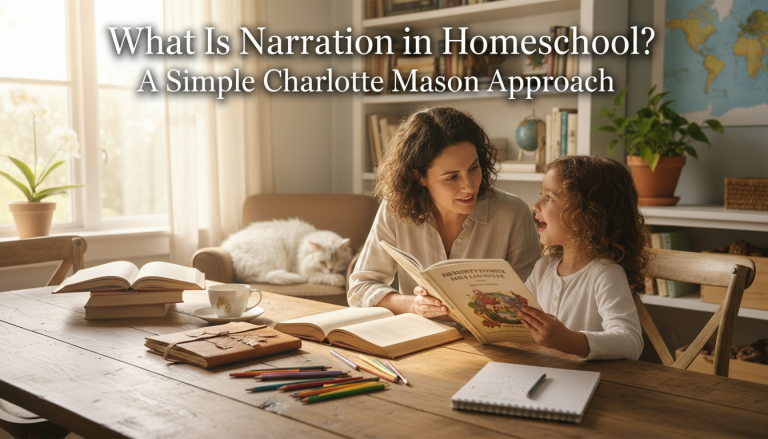
For a complete and practical guide to narration, including specific ideas for struggling readers and younger children, visit this post: What Is Narration in Homeschool? A Simple Charlotte Mason Approach.
Next up: how to build a Charlotte Mason reading atmosphere in your home, the environmental and relational conditions that make everything we have talked about work most beautifully.
Building a Charlotte Mason Reading Atmosphere at Home
There is a word that appears again and again in Charlotte Mason’s writings, but does not appear in most modern homeschool curriculum guides. It is not a method, a strategy, or a scope and sequence. It is something quieter and more powerful than any of those things.
The word is atmosphere.
Charlotte Mason believed that atmosphere was one of the three great instruments of education, alongside discipline and life itself. She understood that children do not only learn from what we teach them directly. They learn from the environment they are immersed in every single day. The feeling of a home. The presence or absence of books. The way the adults around them relate to reading, ideas, and learning. All of it shapes a child’s relationship with knowledge in ways that no lesson plan ever fully captures.
This is wonderful news for you as a homeschool mom. Because building a Charlotte Mason reading atmosphere does not require a budget, a curriculum, or a perfectly organized school room, it requires intention. Small, faithful, beautiful intention repeated day after day in the ordinary spaces of your home.
What Charlotte Mason Meant by Atmosphere
When Charlotte Mason used the word “atmosphere” in the context of education, she was not talking about scented candles and aesthetically arranged bookshelves, though neither of those would hurt.
She was talking about the intellectual and emotional environment that surrounds a child every day. The unspoken messages a child receives about whether learning matters, whether books are treasured, whether ideas are worth discussing, and whether curiosity is welcomed or merely tolerated.
A child who grows up in a home where books are visible and accessible, where adults read for pleasure, where a poem is recited at breakfast, and a story is read aloud after dinner, absorbs a message about reading that goes far deeper than anything a formal lesson can communicate. That child does not just learn to read. They grow up believing that reading is something worth doing. That belief, formed slowly and quietly over years of living inside a reading atmosphere, is one of the most valuable things you can give them.
The Charlotte Mason approach to reading understands that the atmosphere of your home is doing educational work every moment of every day, whether you are actively teaching or not. The question is simply whether that work is intentional.
Practical Ways to Create a Charlotte Mason Reading Atmosphere
Here is the encouraging part. Creating a reading atmosphere in your home does not require a major overhaul or a significant investment. It requires a series of small, deliberate choices that accumulate into something genuinely beautiful over time.
Keep Books Visible and Accessible
This is the single most impactful change you can make immediately. Books that are stored in closed cabinets or stacked in a back bedroom do not invite reading. Visible books, within reach, and naturally scattered throughout your living spaces, send a constant, quiet invitation to pick them up.
Keep a basket of good books near your couch or your favorite reading chair. Put a small shelf of poetry collections and picture books within your youngest child’s reach. Leave your current read-aloud book on the kitchen table between sessions. Let books be a natural part of your home’s visual landscape rather than objects that require a special trip to retrieve.

Let Your Children See You Reading for Pleasure
This is possibly the most powerful thing you can do, and it requires no preparation whatsoever. Lethildren see you reading a book you are genuinely enjoying.
Not a parenting manual. Not a professional development resource. A book you love, read with visible pleasure, in a place where your children can observe you doing it.
Children are profound imitators. They watch the adults they love and quietly conclude what adults do and what they value. A child who regularly sees their mother absorbed in a book she loves receives an unmistakable message. Reading is something worth doing even when nobody is making you do it. That message is worth more than any formal reading incentive program ever devised.
Read Poetry Aloud Every Morning
Charlotte Mason was a devoted advocate for poetry as a daily practice rather than an occasional special event. She believed that poetry, with its concentrated beauty, its natural rhythm, and its capacity to capture human experience in a small number of precise words, was one of the most nourishing things a child’s mind could encounter regularly.
Reading one short poem aloud at breakfast or during your morning gathering takes approximately three minutes. Over the course of a school year, those three minutes add up to hours of exposure to beautiful language, and that exposure builds vocabulary, comprehension, and love of language in ways that are difficult to measure but impossible to miss.
Start with poems your family genuinely enjoys. Robert Louis Stevenson’s A Child’s Garden of Verses is a wonderful beginning. Christina Rossetti’s poetry is gentle, musical, and deeply beautiful. Mary Oliver’s nature poems speak to children and adults alike with a clarity and wonder that feels almost effortless.
Keep a Read Aloud Basket
Designate a specific basket or small shelf near your favorite reading spot, and keep your current read-aloud book there, along with two or three poetry collections and perhaps a nature journal or field guide if your family enjoys nature study.
Having this basket visible and consistently stocked removes the small friction of finding the right book that can sometimes be enough to derail a reading session on a busy day. When the books are already there, waiting quietly in their basket, the decision to read together has already been half made for you.
Visit the Library Regularly and Let Children Choose Freely
Make library visits a consistent and joyful part of your family’s rhythm rather than an occasional errand. Charlotte Mason valued the child’s ability to choose their own reading material alongside the parent’s careful curation of rich living books.
When you visit the library, choose some books intentionally and let your children choose others completely freely. A child who selects their own books is exercising their own reading identity, and that act of choosing is itself a small but meaningful statement. I am a reader. I have preferences. Books are for me.
Talk About Books the Way You Talk About Everything Else You Love
This is perhaps the most overlooked and most natural atmosphere builder of all. Talk about books. At dinner. In the car. During a walk. Mention a character you have been thinking about. Ask your child what they think will happen next. Share a sentence from a book that struck you as particularly beautiful.
When books are discussed with the same naturalness and enthusiasm as anything else your family loves, they become woven into the fabric of your shared life rather than confined to a designated school time slot. That weaving is the atmosphere Charlotte Mason was describing. And it is something every homeschool family can build, one conversation at a time.
Protecting the Joy of Reading
Building a Charlotte Mason reading atmosphere is not only about adding things to your home and your day. It is also about protecting something. The natural, fragile, enormously valuable thing that every child is born with and that careless education can quietly destroy.
The love of reading.
Charlotte Mason was very clear about the practices that damage a child’s relationship with books and reading. She would have recognized all of them immediately in a modern homeschool context because human nature has not changed in the century since she wrote about them.
Never use reading as punishment. Asking a child to read an extra chapter because they misbehaved sends a message about books that no amount of carefully chosen living literature can fully undo. Books must remain in the category of good things in your child’s experience. Always.
Never force a child to read before they are ready. Charlotte Mason cautioned repeatedly against rushing formal academics before a child is developmentally prepared for them. A child who is pushed into reading instruction before their brain is ready will struggle, and that struggle will color their relationship with books for years. Give the gift of time generously and without guilt.
Keep reading time emotionally warm. The atmosphere of your reading sessions matters as much as their content. A child who associates reading time with tension, correction, and performance pressure will find ways to avoid it. A child who associates reading time with warmth, laughter, interesting stories, and a parent who is genuinely present and engaged will reach for books on their own.
Celebrate curiosity more than correctness. When your child asks a surprising question about something they read, or makes an unexpected connection between a story and their own life, or notices something in a book that you had not noticed yourself, celebrate that far more enthusiastically than you celebrate a correctly answered comprehension question. Curiosity is the engine of a reading life. Keep it running.
The Charlotte Mason Approach to Reading and the Atmosphere You Are Already Building
Here is something I want you to notice as you read through these practical suggestions.
You are probably already doing many of them.
You are already reading aloud to your children. You are already visiting the library. You are already choosing books with care and love. You are already treating reading time as an important part of your family’s day.
The Charlotte Mason approach to reading does not ask you to become a different kind of homeschool mom. It asks you to become more intentional about what you are already doing naturally. More deliberate about keeping books visible. More consistent in reading poetry. Be more conscious of the emotional atmosphere you bring to reading time.
You are closer to a Charlotte Mason reading atmosphere than you probably realize. The next step is simply a small, faithful deepening of what is already there.
And that is always enough to begin.
Next up: a simple Charlotte Mason daily reading rhythm that brings everything we have discussed together into a gentle and sustainable framework for your real homeschool life.
A Simple Charlotte Mason Daily Reading Rhythm
Let’s talk about what all of this actually looks like on a Tuesday morning.
Not a perfect morning. Not a morning where everyone woke up cheerful and cooperative, and the coffee was hot, and the school room was tidy—a real Tuesday morning. The kind where someone cannot find their shoes, the baby is fussy, and you are already wondering how you are going to fit everything in before lunch.
Because that is the morning Charlotte Mason was designing for. Not the ideal homeschool day that exists in Pinterest photographs. The real one. The one you are actually living.
One of the most countercultural and most liberating aspects of the Charlotte Mason approach to reading is its insistence on shortness. Short lessons. Short sessions. Brief, focused, joyful encounters with books and language that leave a child wanting more rather than watching the clock. Charlotte Mason did not believe that more time always meant more learning. She believed that the right amount of time, spent in the right way, was worth far more than a longer session that exhausted everyone involved.
That conviction is the foundation of everything in this section.
Why Short Lessons Are a Feature, Not a Limitation
If you have ever felt guilty about keeping your reading lessons short, this section will be genuinely freeing for you.
Charlotte Mason was very specific about lesson length, particularly for young children, and her recommendations were far shorter than most modern homeschool approaches would suggest. For children in the early years, she recommended lessons of no more than fifteen to twenty minutes in any single subject before moving on to something different. For younger children, she recommended even less.
Not because she thought learning was unimportant. It was because she understood how attention actually works in a child’s brain.
A child who is engaged and focused for ten minutes learns far more than a child who is physically present but mentally exhausted for forty minutes. Fatigue does not produce learning. It produces the appearance of learning while the child’s brain has quietly checked out and gone somewhere more interesting.
Short lessons protect attention. They protect joy. They leave the child at the end of a session with a sense of satisfaction and completion rather than relief that it is finally over. And perhaps most importantly, they leave the child wanting more, which is the single most valuable outcome any reading lesson can produce.
The Charlotte Mason approach to reading trusts that a child who consistently leaves their reading time wanting more will, over years of faithful daily practice, become exactly the reader you are hoping for.
What a Charlotte Mason Reading Day Can Look Like
Here is a gentle sample daily rhythm showing how phonics practice, independent reading, and family read-alouds can all fit naturally into a homeschool day without overwhelming anyone. This is not a rigid schedule. It is a flexible framework that honors both the structure children need and the natural rhythm of real family life.
Think of it as a loose shape rather than a timetable. The shape stays consistent even when the specific timing shifts from day to day.
Morning: Short Focused Phonics or Word Work
Begin your reading time with ten to fifteen minutes of focused phonics or word work practice. This is your most structured and most intentional teaching time. It is where you work directly on whatever phonics pattern or decoding skill your child is currently building.
Keep this portion playful and purposeful in equal measure. Use letter tiles, word cards, simple games, or a short phonics sequence from whatever program you are using. When the ten or fifteen minutes are complete, stop even if it feels like you could do more. Stopping while the child is still engaged and willing is one of the most Charlotte Mason things you can do in a school day.
If you need more resources and ideas for games and phonics-based activities, be sure to check out 5 Easy Homeschool Phonics Games and Learning at the Primary Pond. Permit yourself to have fun as you are teaching your child to read.
Mid Morning: Reading Together
After your word work, sit side by side and read together for another ten to fifteen minutes. Depending on where your child is in their reading journey, this might look like your child reading aloud to you from a book at their current level, the two of you reading in unison through a slightly challenging passage, or you reading aloud while your child follows along.
This is also the natural time for a brief narration. After reading together, pause and ask your child to tell you what happened in their own words. Keep it casual and warm. One or two sentences is a perfectly complete narration for a young reader. Celebrate whatever they give you and move on.
Anytime: Family Read Aloud
Your family can read aloud at any time of day that feels natural and unhurried for you. Many Charlotte Mason families read aloud after lunch as a gentle settling time before afternoon activities. Others read aloud in the evening after dinner as a natural wind-down before bed. Some families read at breakfast alongside their morning poem.
The specific time matters far less than the consistency. Choose a time that your family can reliably protect, and anchor your read-aloud there. A read-aloud that happens at the same time every day becomes part of the rhythm of your home rather than something that has to be negotiated and scheduled fresh each morning.
Throughout the Day: Language Rich Experiences
The Charlotte Mason approach to reading extends well beyond your formal reading sessions into the texture of your whole day. Poetry recited during morning time. Songs sung during chores. Audiobooks are played during long car rides. Nature journals written in simple sentences during afternoon walks. Stories told at the dinner table.
None of these requires lesson planning or preparation. They require the intention to keep language and story present in your family’s daily life. And that intention, practiced consistently over time, builds a reading life that is far richer than anything a formal curriculum could produce on its own.
The 15 Minute Reading Boost and the Charlotte Mason Approach to Reading
If the daily rhythm above feels like more than you can manage right now, I want to offer you something even simpler.
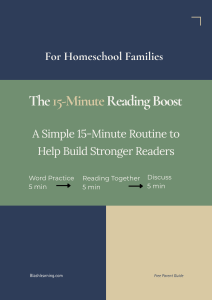
The 15 Minute Reading Boost was created specifically for homeschooling families who need a clear, gentle, immediately usable daily reading framework. It is built on the same convictions that shape the Charlotte Mason approach to reading: short, focused sessions; a balance of skill-building and joyful reading; and a warm, relational tone throughout.
Here is how it works.
Five minutes: Word Practice
A short, playful phonics or word work activity that warms up the decoding engine without exhausting anyone before the real reading begins.
Five minutes: Read Together
Side-by-side reading at your child’s current level, with your voice and presence making the experience feel safe and supported.
Five minutes: Talk About the Story
A brief, conversational narration that builds comprehension as naturally and joyfully as possible.
Fifteen minutes. Three parts. One simple daily habit that honors Charlotte Mason’s conviction that short, consistent, joyful lessons are the most powerful kind.
What to Do When the Rhythm Falls Apart
It will. Let’s say that plainly, without any guilt attached.
There will be weeks when the read-aloud does not happen, and the word work gets skipped, and reading time consists entirely of you and your child sitting on the couch together, reading separate books in companionable silence. There will be seasons of illness, travel, new babies, family transitions, and plain old discouragement when the beautiful daily rhythm you built seems to have evaporated entirely.
This is not failure. This is homeschooling. And Charlotte Mason, who spent her life working with real children in real families, would have recognized it immediately.
Here is what to do when the rhythm falls apart.
Do not try to catch up. When you have missed a week of reading sessions, the instinct is to double up and make up the lost ground. Resist that instinct completely. Doubling up produces exhaustion and resentment, not learning. Begin again from where you are, with the next session, at the normal length, without any reference to what was missed.
Return to the smallest possible version. On the days when returning to the full rhythm feels impossible, return to just one element of it. Read one poem aloud. Do five minutes of word work. Read a single page together. That single small faithful act re-establishes the habit and re-anchors the rhythm in a way that skipping entirely never can.
Remember that consistency over time is what matters. Charlotte Mason was not measuring learning in days or weeks. She was measuring it in years. A reading rhythm that holds together faithfully over months and years, even with gaps and imperfect days woven through it, produces a reader. A perfect schedule maintained for three weeks and then abandoned produces nothing lasting.
Be consistent over the long arc of your homeschool years. Be gentle with yourself about the individual days. That combination is the heart of everything Charlotte Mason believed about education and the foundation of a reading life worth building.
A Note on Multiple Children at Different Reading Stages
If you are homeschooling more than one child, maintaining a daily reading rhythm for each of them can feel logistically overwhelming. Here is a simple and sustainable way to think about it.
Stagger your individual reading sessions. Fifteen focused minutes with your youngest reader while older children work independently, followed by fifteen minutes with your next child, is a completely manageable rhythm. Each child receives the one-on-one reading time they need, and you are not stretched impossibly thin trying to work with everyone at once.
Use your family read-aloud to teach everyone simultaneously. When you read a rich living book aloud to all of your children together, every child in the room is receiving vocabulary-building, comprehension modeling, and a love of story, regardless of their individual reading level.
Your most advanced reader and your pre-reader are both benefiting from the same read-aloud in ways appropriate to their current stage. This is one of the most beautiful efficiencies of the Charlotte Mason approach and one of the most practical gifts it offers to families with multiple children.
Let older children read to younger ones. An older child who reads aloud to a younger sibling is building fluency, practicing expression, and experiencing the joy of being the one who knows. A younger child listening to an older sibling read is receiving a read-aloud from someone they love and admire. Both children benefit, and you get a few minutes to breathe. Everyone wins.
Next up: Charlotte Mason reading at every stage, from your youngest pre-reader all the way through to your independent and flourishing reader, and what the Charlotte Mason approach looks like as your child grows.
Charlotte Mason Reading at Every Stage
One of the questions I hear most often from homeschool moms who are just discovering Charlotte Mason is this.
“Is this approach only for young children? My oldest is already nine, and my youngest just turned four. Can Charlotte Mason reading really work for both of them at the same time?”
The answer is one of the most encouraging aspects of the Charlotte Mason approach to reading: a resounding yes.
Charlotte Mason did not design her philosophy for a specific age or stage. She designed it for children. All children. From the toddler who is just beginning to notice that marks on a page carry meaning, all the way through the teenager who is ready to engage with the great ideas of history and literature in written narration and thoughtful discussion.
The methods adapt as the child grows. The philosophy stays constant. And that consistency is one of the greatest gifts of the Charlotte Mason approach, the knowledge that you do not need to find a new educational philosophy every few years as your child develops. The one you are building now will carry you both all the way through.
Charlotte Mason Reading with Pre-Readers
Before a child ever sounds out their first word or traces their first letter, a Charlotte Mason home is already doing something profoundly important for their reading development.
It is filling them with language.
Charlotte Mason understood that the years before formal reading instruction are not a waiting room where nothing educational is happening. They are a season of rich and essential preparation. Every read-aloud, every poem recited at breakfast, every song sung during the morning routine, every nature walk narrated in simple sentences is building phonemic awareness, vocabulary, and a love of language that formal reading instruction will build on later.
A pre-reader in a Charlotte Mason home is not waiting to start learning. They are already learning, most naturally and joyfully possible.
What Pre-Readers Need Most
Read alouds from beautifully written picture books and simple living books. Poetry read aloud daily with expression and delight. Songs, rhymes, and playful sound games that develop phonemic awareness long before a phonics lesson ever begins. Meaningful conversation that builds vocabulary naturally. And above all, the freedom to be exactly where they are developmentally, without pressure to begin formal reading before they are ready.
Charlotte Mason would have been deeply opposed to the modern tendency to push formal reading instruction into the toddler and preschool years. She believed firmly that rushing a child into academics before their brain is ready does genuine harm, and that the best preparation for reading is a childhood rich in language, story, nature, and play.
If your youngest child is a pre-reader, your most important job right now is not to teach them to read. It is to love books with them so enthusiastically that reading becomes something they cannot wait to do.
Charlotte Mason Reading with Beginning Readers
When a child is ready to begin formal reading instruction, and Charlotte Mason would have left that readiness to the parent’s careful observation rather than a calendar date, the Charlotte Mason approach combines gentle systematic phonics with immediate access to living books through read alouds.
This combination is important to understand because it is one of the places where Charlotte Mason diverges most significantly from purely skill-based reading programs.
In a purely skill-based approach, a child spends the early reading years working almost exclusively with controlled decodable texts, simple books written to practice specific phonics patterns, before being introduced to richer literature. The skill-building happens first, and the rich reading comes later.
In the Charlotte Mason approach to reading, both happen simultaneously from the very beginning. The child works on phonics and decoding skills in their structured lesson time. And every day, through the family read aloud, that same child is also experiencing rich, beautifully written living books that are far beyond their current independent reading level. They are building skills with simple texts while simultaneously experiencing the richness of real literature through their parent’s voice.
This matters enormously for motivation. A beginning reader who is exposed only to controlled decodable texts may form the impression that books are flat, simple, and not particularly interesting. A beginning reader who is also hearing wonderful stories read aloud every day knows from direct experience that books contain worlds worth entering. That knowledge keeps them working through the hard parts of learning to decode because they already know what awaits them on the other side.
What Beginning Readers Need Most
Short, consistent, daily phonics practice with a clear, logical sequence: decodable books or simple leveled readers for independent reading practice. Daily read-alouds from living books that are well above their independent reading level. Frequent narration practice after both independent reading and read-alouds. Patient encouragement that celebrates effort and progress rather than performance and perfection.
Charlotte Mason Reading with Developing Readers
A developing reader is a child who has broken through the initial decoding barrier and is beginning to read with increasing smoothness and confidence. The sounding out is becoming more automatic. The reading is starting to flow. And something wonderful is beginning to happen that Charlotte Mason considered one of the most exciting milestones in a child’s education.
The child is starting to read for themselves.
Not just because you have asked them to. Not just during the structured reading session. But independently, by choice, because a story has captured their attention and they want to find out what happens next.
When you see this beginning to emerge, celebrate it quietly and generously. It is the first green shoot of a lifelong reading life, and it deserves to be protected and encouraged with great care.
What Developing Readers Need Most
A growing collection of books at the right level, interesting enough to sustain independent reading but not so difficult that decoding becomes a barrier to enjoyment. Continued read-alouds from living books that stretch vocabulary and comprehension beyond the child’s independent reading level. Narration that deepens and begins to include more thoughtful follow-up questions. Fluency-building practice through poetry, repeated reading, and read-alouds together. And the freedom to choose some of their own reading material independently, because a child who chooses their own books is building a reading identity.
Charlotte Mason Reading with Independent Readers
An independent reader can read on their own with fluency and genuine comprehension. Decoding is no longer effortful. The brain is fully free to engage with meaning, with character, with ideas, with the beauty of a well-constructed sentence.
This is the stage Charlotte Mason was ultimately working toward. Not a child who has passed a reading assessment. A child who reads because reading has become one of the great pleasures and sources of nourishment in their life.
At this stage, your role shifts beautifully. You move from reading instructor to reading companion. You are no longer primarily teaching your child to read. You are reading alongside them, discussing books together, sharing recommendations, debating characters, and modeling what a lifelong reading life actually looks like in practice.
Do not make the mistake of abandoning the family read-aloud at this stage simply because your child can now read independently. The books you can read aloud together will always be richer and more complex than what your child chooses to read alone. The shared experience of a family read aloud, the discussions, the laughter, the occasional tears, continues to build comprehension, vocabulary, and love of literature in ways that independent reading alone cannot fully replicate.
What Independent Readers Need Most
Rich, living books that spark genuine curiosity and invite deep thinking. A parent who is still reading aloud together, even though it is no longer strictly necessary. Narration that has evolved into written form and is beginning to resemble real literary discussion. Freedom and encouragement to read widely and follow their own interests. And the ongoing experience of living in a home where reading is visibly valued and joyfully practiced by the adults they love most.
Charlotte Mason Reading with Struggling Readers
No discussion of the Charlotte Mason approach to reading at every stage would be complete without an honest and encouraging word for the homeschool mom whose child is struggling.
Perhaps your child is older than most of the developmental timelines suggest they should be for their current reading level. Perhaps you have been working consistently and patiently for months or years, and progress is slower than you had hoped. Perhaps reading time is still hard and sometimes tearful, and you are quietly wondering whether you are failing your child in some fundamental way.
You are not.
Charlotte Mason’s philosophy is particularly gentle and effective for children who find reading difficult, not despite its richness but because of it. A child who struggles with decoding can still experience the full beauty of living books through read-alouds. A child who finds independent reading exhausting can still narrate beautifully from what they hear. A child who is behind by every conventional metric can still grow in vocabulary, comprehension, love of story, and genuine intellectual engagement with ideas. At the same time, their decoding skills are being developed patiently and consistently.
The Charlotte Mason approach never reduces a child to their struggle. It holds the whole child in view at all times, the thinker, the feeler, the curious person who deserves real books and real ideas regardless of where their reading skills currently sit.
If your child is struggling, keep reading aloud to them. Keep inviting narration. Keep filling their life with poetry, stories, and beautiful language. Keep working patiently on the phonics and decoding skills they need, one small step at a time, with gentleness and without alarm.
And trust that a child who is surrounded by rich language and living books and a mother who believes in them is a child who is going to get there.
What Struggling Readers Need Most
Patient, consistent daily phonics and decoding instruction at their exact current level, without rushing or pressure. Daily read-alouds from living books that give them access to rich literature regardless of their independent reading level. Narration in whatever form they can manage, oral, drawn, acted out, or even whispered to a stuffed animal. An emotional atmosphere around reading that is warm, safe, and completely free from shame. And a parent who is paying attention, adjusting as needed, and never confusing the pace of the journey with the destination.
For more guidance on supporting a struggling reader at home, visit this post: How to Help Your Child Improve Reading Comprehension at Home.
Next up: the most common questions homeschool moms ask about the Charlotte Mason approach to reading, answered honestly and warmly in one place.
Questions Homeschool Moms Ask About Charlotte Mason’s Approach to Reading.
Do I Need a Special Curriculum to Use Charlotte Mason Reading?
No. Charlotte Mason’s approach is a philosophy, not a packaged curriculum. You need good books, a consistent read-aloud practice, narration, and a warm reading atmosphere. That is genuinely enough to get started. There are, however, great resources based on Charlotte Mason philosophy. I would encourage you to check out AmblesideOnline. You will find a wealth of information and more guidance on this site.
Can I Use Charlotte Mason Reading Alongside a Phonics Program?
Absolutely. Charlotte Mason’s approach and systematic phonics instruction are not in conflict. In fact, they work beautifully together. Use a simple phonics program for your structured decoding instruction, and layer Charlotte Mason’s living books, read-alouds, and narration around it.
What If My Child Does Not Want to Narrate?
Start even smaller. One sentence. One thing they remember. One question with a concrete answer. Narration is a habit that develops gradually. The resistance usually softens when the pressure is removed, and the reading material is genuinely interesting to the child.
Is Charlotte Mason Only for Young Children?
Not at all. Charlotte Mason’s philosophy scales beautifully from the earliest pre-reading years through high school. The methods evolve as the child grows, but the core convictions, that children deserve real books, real ideas, and real conversations, remain constant throughout.
How Do I Know If I Am Doing Charlotte Mason Reading Correctly?
If your child is being read to regularly from books that are beautifully written, if they are narrating what they hear and read in their own words, if reading time feels warm and joyful rather than heavy and pressured, and if your child is growing in their love of books and ideas, you are doing it right.
You Are Ready to Begin This Beautiful Journey
There is something I want you to know before you close this guide and head back to your kitchen table.
You did not stumble onto Charlotte Mason’s philosophy by accident. You found it because something in you was already looking for exactly this. A way of teaching reading that honors your child as a whole person. A way of filling your home with beautiful books and meaningful conversations. A way to build a reading life that your child will carry with them long after they have forgotten every worksheet they have ever completed.
That longing you felt? It was pointing you in exactly the right direction.
What You Now Know
You came to this guide perhaps knowing the name Charlotte Mason and not much else. You are leaving it with something far more valuable than a list of methods to implement. You are leaving with a philosophy to live by.
You now know that the Charlotte Mason approach to reading is not a rigid system with rules to follow and boxes to check. It is a set of beautiful convictions about children, books, and the kind of reading life worth building together. Convictions that children are born persons who deserve real books and real ideas.
Living books nourish the mind in ways that no dry textbook ever could. Reading aloud together is one of the most profound educational gifts you can offer your child at any age. Narration builds deeper comprehension than any worksheet ever printed. A warm, book-filled atmosphere does more for a child’s reading development than any curriculum on the market. Short, faithful daily lessons, repeated with gentleness and consistency, shape a reading life that lasts.
You know all of that now. And knowing it changes everything about how you show up at the kitchen table tomorrow morning.
What Charlotte Mason Would Say to You Today
Charlotte Mason spent her life advocating for children and for the parents and teachers who loved them. She believed deeply that the adults closest to a child were their most important educators, not because of their credentials or their training, but because of their relationship.
She would look at you, a homeschool mom who chose to be present for her child’s entire education, who is reading guides like this one on a Sunday evening, trying to do better, who shows up faithfully day after day even when it is hard, and she would tell you that you are exactly the right person for this work.
Not because you are perfect. Not because you have it all figured out. But because you are there. Present, willing, and paying attention. That, Charlotte Mason believed, is the foundation of everything.
What to Do Next
You have the philosophy. Now let’s talk about your very next step because I want this guide to produce something real and tangible for you and your child, not just a warm feeling that fades by Tuesday.
Here is the simplest possible next step you can take today.
Pick one thing from this guide and do it tomorrow.
Just one. Read a poem aloud at breakfast. Ask your child to tell you what happened in a story in their own words. Visit the library and let your child choose three books freely. Read the first chapter of a living book together after dinner.
You do not need to overhaul your entire homeschool day. You do not need a new curriculum or a complete reorganization of your schedule. You need one small, faithful step in the right direction. And then another one the day after that.
Charlotte Mason’s philosophy is not built in a day. It is built in exactly the way she always taught, through small, consistent, joyful actions repeated faithfully over time until they become the natural rhythm of your home.
And if you want a simple, practical framework to help you get started tomorrow morning, the free 15 Minute Reading Boost was created specifically for this moment. It takes the heart of everything we have discussed in this guide and puts it into a gentle daily routine you can begin using right away. No overwhelm. No complicated instructions. Just fifteen faithful minutes that will begin building the reading life you have been imagining for your child.
Keep Exploring with These Related Posts
If this guide sparked something in you and you want to keep learning, here are the posts that pair best with what you just read.
Who Was Charlotte Mason and Why Does She Still Matter? The story of the woman behind the philosophy, written for the mom who wants to understand the heart behind the methods before she tries to implement them.
What Is Narration in Homeschool? A Simple Charlotte Mason Approach: A complete, practical guide to narration, including specific ideas for younger children, struggling readers, and families who are just getting started with this beautiful practice.
10 Best Charlotte Mason Books for a First-Grade Reading List: A carefully curated collection of living books that work beautifully as read-alouds and for independent reading for beginning readers, complete with descriptions to help you choose what is right for your family.
How to Teach Your Child to Read at Home: A Complete Guide. The companion pillar post to this one, covering the full reading journey from phonemic awareness and phonics all the way through fluency, comprehension, and building a daily reading routine that sticks.
A Final Word from Rose
I want to close this guide the way Charlotte Mason would have wanted every lesson to close. Not with a test, an assignment, or a list of things to do before next time. But with an invitation.
An invitation to slow down a little. To read something beautiful aloud tonight. To ask your child what they thought about a story and then really listen to the answer. To trust that the quiet, faithful, book-filled days you are building in your home are doing something profound, even on the days when it does not feel that way.
Charlotte Mason believed that education is a life. Not a race to a finish line or a series of boxes to check, but a full, rich, growing life shaped by beautiful ideas, meaningful relationships, and a lifelong love of learning.
That is what you are building. One good book at a time. One warm conversation at a time. One faithful day at a time.
And it is more than enough.
Did this guide help you see Charlotte Mason reading in a new way? Save it to your favorite homeschool Pinterest board so you can find it again when you need it. And if you have a homeschool mom friend who has been curious about Charlotte Mason, share it with her. She needs to know that this beautiful approach is simpler and more accessible than she thinks.